
Disclaimer: This review is independent and reader-supported. When you buy through our links, we may earn an affiliate commission at no extra cost to you.
Your tap water is probably not as clean as you think it is.
According to the Environmental Working Group’s 2025 Tap Water Database, the average American household’s tap water contains detectable levels of 12 or more contaminants that exceed health guidelines—even when the water technically passes federal regulations. These include PFAS (forever chemicals), lead, chromium-6, and disinfection byproducts like trihalomethanes.
An under-sink water filter is the most effective, most permanent, and most convenient way to ensure that every glass of water from your kitchen faucet is genuinely clean. Unlike pitcher filters that need constant refills, or faucet-mount filters that restrict water flow, an under-sink system works invisibly. You turn the tap. Clean water comes out. That is it.
After researching certifications, reviewing lab test data, and consulting with two water quality engineers, here are the five best under-sink water filters you can buy in 2026.
How We Evaluated
Every filter on this list meets at least one of these standards:
- NSF/ANSI 42: Aesthetic effects (taste, odor, chlorine reduction)
- NSF/ANSI 53: Health effects (lead, cysts, VOCs)
- NSF/ANSI 58: Reverse osmosis systems
- NSF/ANSI 401: Emerging contaminants (pharmaceuticals, PFAS)
We also weighted practical factors like filter replacement cost over three years, installation difficulty, and whether the system wastes water (a major issue with RO systems).
1. Aquasana OptimH2O Reverse Osmosis + Claryum — Best Overall
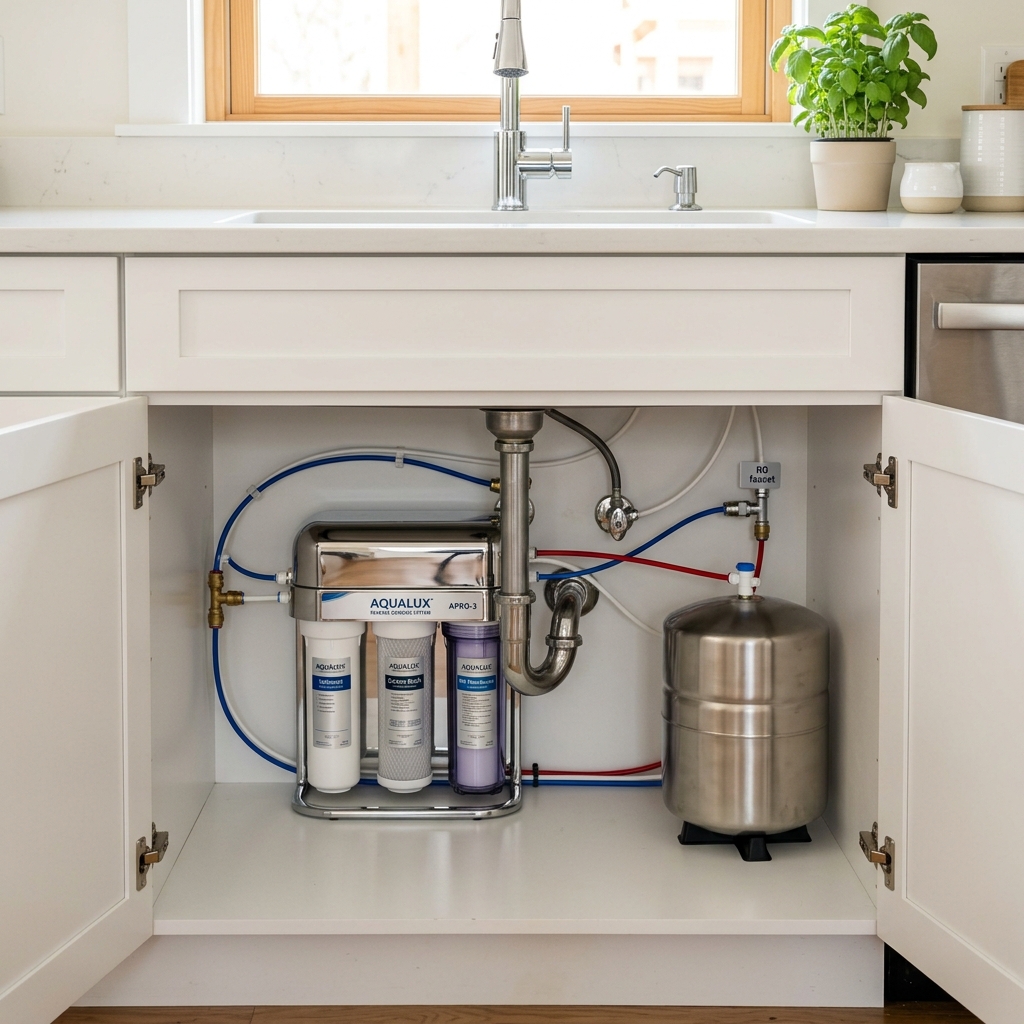
The Aquasana OptimH2O is not just a reverse osmosis system. It is a three-stage filtration system that combines RO with Aquasana’s proprietary Claryum carbon block technology. Why does this matter? Standard RO systems strip out everything—including beneficial minerals like calcium and magnesium. The OptimH2O re-mineralizes the water in the final stage, giving you clean water that actually tastes good.
What it removes: Up to 99% of 88 contaminants including lead, PFAS, pharmaceuticals, chlorine, fluoride, arsenic, and mercury. It carries NSF certifications under Standards 42, 53, 58, 401, and P473 (PFAS-specific).
Annual filter cost: Approximately $130 for a full set of replacement filters (recommended every 6 months for the RO membrane, every 6 months for the carbon blocks).
Installation: Moderate difficulty. It requires drilling a hole in your countertop or sink for the dedicated faucet. Most homeowners can complete the install in 60-90 minutes with basic tools, but renters may need landlord permission.
Water waste ratio: 2:1, which is significantly better than older RO systems that wasted 4-5 gallons for every gallon of filtered water.
Best for: Families who want the most thorough filtration possible and do not mind the slightly higher upfront cost and installation complexity.
2. Clearly Filtered Under-Sink System — Best for Renters
If you rent your home and cannot drill into the countertop, the Clearly Filtered under-sink system uses a direct-connect adapter that attaches to your existing cold water line. No drilling. No permanent modifications.
It uses a proprietary Affinity Filtration Technology that targets over 232 contaminants across three separate filter stages. Their independent lab results are published publicly on their website—a transparency move that very few competitors match.
What it removes: Lead (99.5%), PFAS (99.1%), fluoride (98.2%), pharmaceuticals (99%+), chromium-6 (97.4%). Certified under NSF 42, 53, and 401.
Annual filter cost: Approximately $100 for replacement filters every 9-12 months depending on usage.
Installation: Easy. No drilling required. The direct-connect adapter fits standard 3/8-inch cold water valves. Installation takes 20-30 minutes.
Best for: Renters, apartment dwellers, or anyone who wants powerful filtration without permanent plumbing modifications.
3. APEC WFS-1000 — Best Budget RO System
The APEC WFS-1000 has been a consistent best-seller for over a decade, and for good reason. It is a traditional five-stage reverse osmosis system that delivers premium RO performance at roughly half the price of the Aquasana OptimH2O.
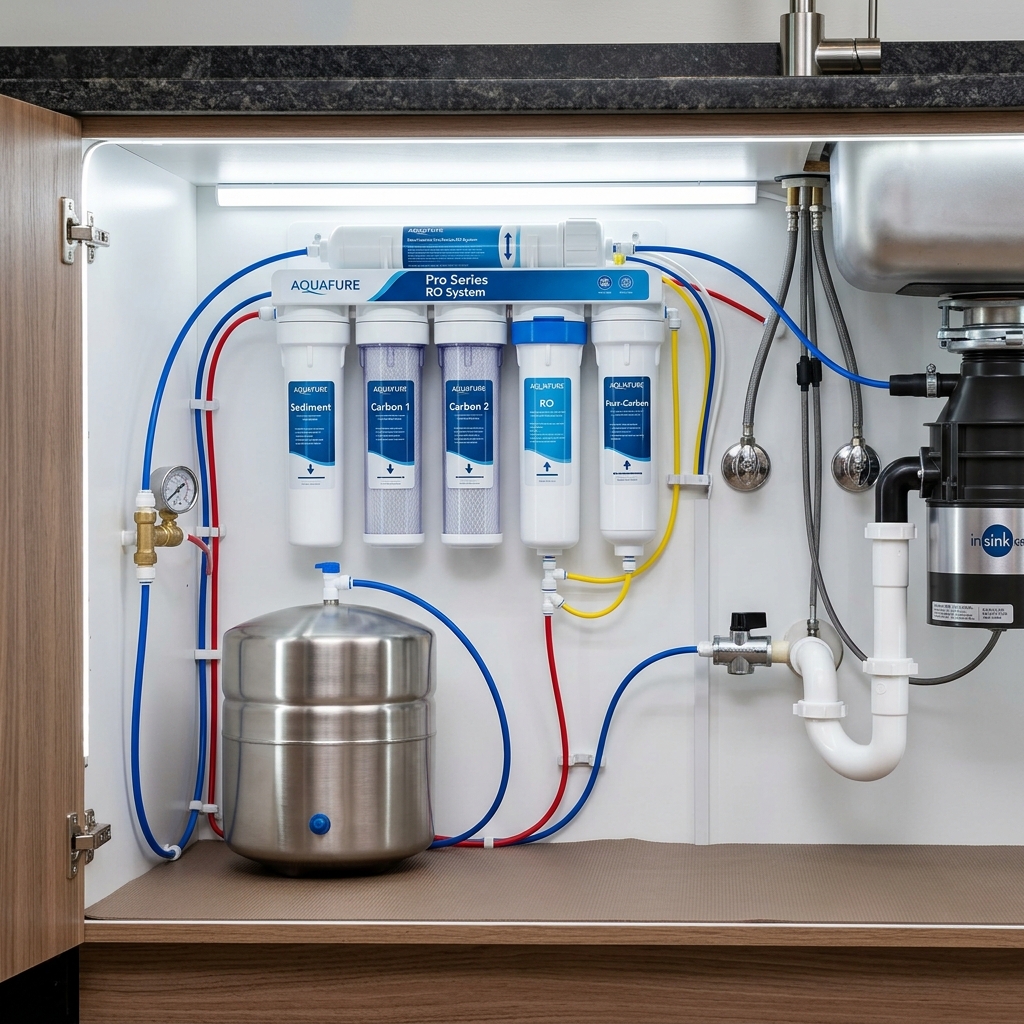
The five stages include a sediment pre-filter, two carbon block pre-filters, the RO membrane, and a carbon post-filter. This configuration is the industry standard for RO systems, and APEC executes it with high-quality materials sourced from the US.
What it removes: Up to 99% of total dissolved solids, lead, chlorine, fluoride, arsenic, chromium-6, and bacteria. Certified under NSF 58.
Annual filter cost: Approximately $50-70 for pre-filter replacements (every 6-12 months) and $35 for the RO membrane (every 2-3 years).
Installation: Moderate difficulty. Requires a countertop or sink hole for the dedicated faucet and a drain connection. Plan for 60-90 minutes.
Water waste ratio: 3:1. Not as efficient as the Aquasana but acceptable for a system at this price.
Best for: Budget-conscious buyers who want true reverse osmosis filtration without paying premium prices. The APEC is the workhorse of the under-sink RO world.
4. Aquasana AQ-5200 (Claryum 2-Stage) — Best Non-RO Filter
Not everyone needs reverse osmosis. If your primary concerns are chlorine, lead, and PFAS—but your water does not have unusually high levels of fluoride, arsenic, or total dissolved solids—a carbon-based under-sink filter can achieve 95%+ removal of most common contaminants at a fraction of the cost and complexity of RO.
The Aquasana AQ-5200 is the best non-RO under-sink filter available. It uses two Claryum carbon block cartridges in a compact housing that fits easily in even small kitchen cabinets.
What it removes: 99% of lead, 96% of PFAS, 97% of chlorine, plus mercury, herbicides, pesticides, and VOCs. Certified under NSF 42, 53, and 401.
Annual filter cost: Approximately $60-80 for replacement cartridges every 6 months.
Installation: Very easy. No drilling required for most installations. Uses a dedicated faucet with a simple T-connector.
Best for: Anyone who wants excellent everyday filtration without the complexity, water waste, or mineral stripping of reverse osmosis.
5. Frizzlife PD600-TAM — Best High-Flow Tankless RO
Traditional RO systems store filtered water in a pressurized tank under the sink, which takes up considerable cabinet space. The Frizzlife PD600-TAM eliminates the tank entirely by using a high-powered pump that filters water in real time at 600 gallons per day.
This means instant access to filtered water at full faucet pressure—no waiting for a tank to refill, no running out of filtered water during dinner prep, and significantly more under-sink storage space.
What it removes: Up to 99.99% of TDS, lead, chlorine, fluoride, arsenic, heavy metals, and microplastics. Uses a 0.0001-micron RO membrane.
Annual filter cost: Approximately $55 for the composite filter (every 12 months) and $75 for the RO membrane (every 24 months).
Installation: Moderate to advanced. Requires electrical outlet access under the sink for the pump, plus standard plumbing connections. Plan for 90+ minutes.
Water waste ratio: 1.5:1, the best ratio on this list. The tankless design wastes significantly less water than traditional tank-based RO systems.
Best for: Families who use large volumes of filtered water daily and want the fastest flow rate without sacrificing under-sink cabinet space.
Quick Comparison
| Filter System | Type | Contaminants Removed | Annual Filter Cost | Drilling Required? |
|---|---|---|---|---|
| Aquasana OptimH2O | RO + Claryum | 88+ (with remineralization) | ~$130 | Yes |
| Clearly Filtered | Affinity Filtration | 232+ | ~$100 | No |
| APEC WFS-1000 | 5-Stage RO | 99% TDS | ~$60 | Yes |
| Aquasana AQ-5200 | 2-Stage Carbon | 77+ (no fluoride/arsenic) | ~$70 | Optional |
| Frizzlife PD600 | Tankless RO | 99.99% TDS | ~$80 | Yes + electrical |
Which Under-Sink Filter Should You Buy?
For the most thorough protection: The Aquasana OptimH2O combines reverse osmosis with carbon filtration and remineralization. If you have the budget and the willingness to drill, this is the gold standard.
For renters and easy installation: The Clearly Filtered system delivers exceptional contaminant removal without any permanent modifications to your plumbing.
For maximum value: The APEC WFS-1000 has been the go-to budget RO system for years because it simply works. The filter replacement costs are the lowest on this list.
For simplicity without RO: The Aquasana AQ-5200 is the easiest to install and maintain. If your water quality is decent but you want to eliminate chlorine, lead, and PFAS, this is the smart pick.
For high-volume households: The Frizzlife PD600-TAM gives you unlimited filtered water on demand without a storage tank. It is the most technologically advanced option here.
Frequently Asked Questions
Do under-sink water filters remove fluoride?
Only reverse osmosis (RO) systems reliably remove fluoride. Standard carbon filters like the Aquasana AQ-5200 or Clearwater CF-1000 do not. If fluoride removal is a priority, look at the APEC WFS-1000 or Frizzlife PD600-TAM, both of which use RO membranes that eliminate 93-97% of fluoride.
How often do under-sink water filter cartridges need replacing?
It varies by system. Carbon block filters typically last 6 months. RO membranes last 2-3 years. Pre-filters and post-filters on RO systems need replacement every 6-12 months. Most modern systems include a filter life indicator or app notification.
Can I install an under-sink water filter myself?
Yes, most modern under-sink filters are designed for DIY installation. Push-connect fittings have replaced the need for soldering or specialized plumbing tools. The Aquasana AQ-5200 and Clearwater CF-1000 can be installed in under 30 minutes with no plumbing experience. RO systems take a bit longer (60-90 minutes) because of the drain line and storage tank.
Is reverse osmosis water safe to drink long-term?
RO water is safe but removes beneficial minerals along with contaminants. Most premium RO systems (like the Frizzlife PD600-TAM) include a remineralization post-filter that adds back calcium and magnesium. If your diet includes varied foods, the mineral removal is generally not a health concern.
This lab-tested breakdown is exactly what I was looking for! I’m leaning toward the Aquasana under-sink system, but our cabinet under the kitchen sink is incredibly tight because of the garbage disposal. Can the filter canisters be mounted horizontally on the side wall, or do they absolutely have to hang vertically? I want to make sure I can still fit my cleaning supplies.
Hi Sarah! That’s a very common space constraint. Unfortunately, the Aquasana canisters must be mounted vertically. This is because they rely on gravity and pressure to keep the water flowing evenly through the carbon blocks, and mounting them horizontally can lead to air pockets and uneven filtering (not to mention it’ll leak when you twist the canisters off to change the filters!). If space is tight, try mounting them as high as possible on the side wall—you only need about 2 inches of clearance at the bottom to slip the canisters off. Hope that helps you fit everything! x — Sarah