
Last updated: May 2026. This article is reviewed quarterly.
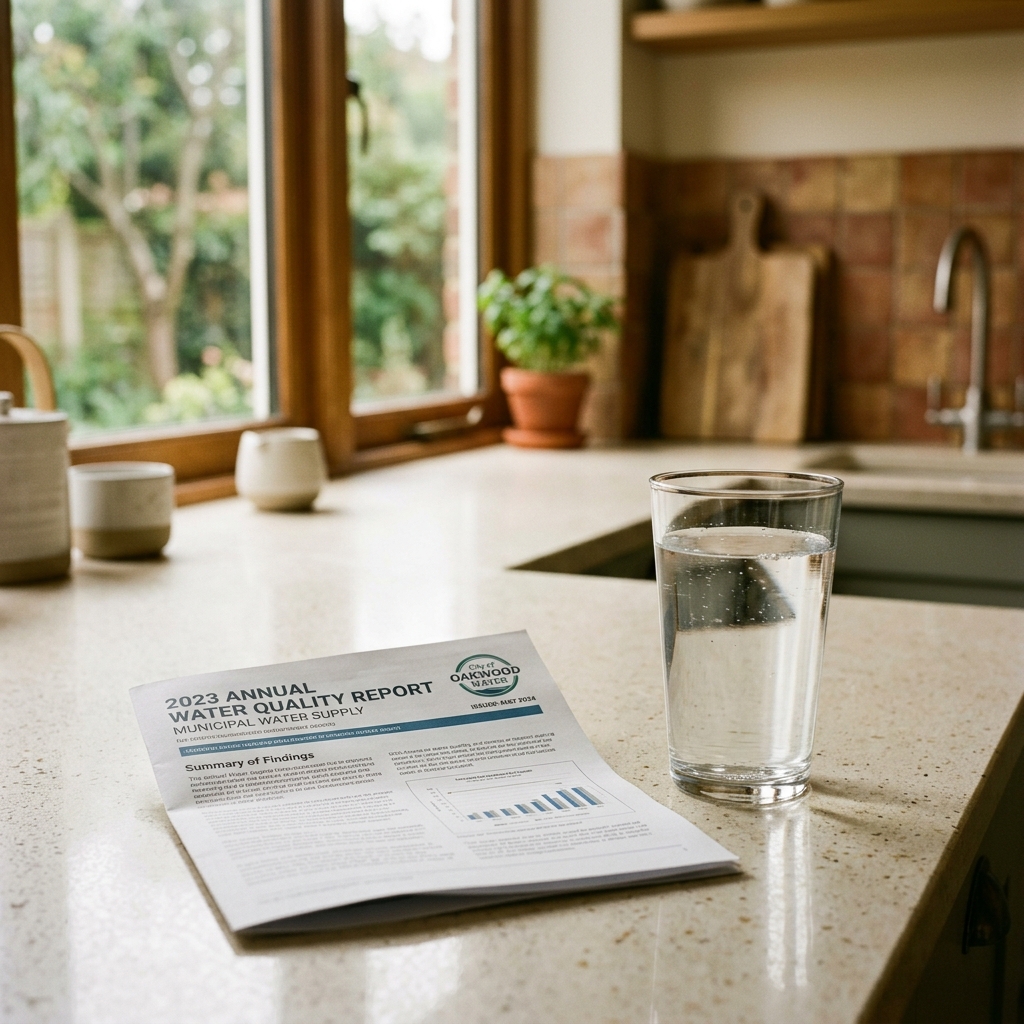
In 2023, the Environmental Working Group analyzed water quality data from nearly 50,000 utilities across the U.S. and found detectable levels of PFAS (per- and polyfluoroalkyl substances) in drinking water serving an estimated 110 million Americans. The EPA had set zero as the health goal for several PFAS compounds, yet many water systems still showed measurable contamination.
Your municipal water supply almost certainly meets legal standards. But “legal” and “safe” aren’t the same thing. Federal limits for many contaminants haven’t been updated in decades, and the list of regulated substances covers only 90 contaminants out of thousands that can end up in water supplies.
This guide walks through what your annual water quality report actually tells you, what it doesn’t, and what you can do about the gaps.
This article contains affiliate links. If you purchase through our links, we may earn a small commission at no extra cost to you. See our full disclosure.
What Your Water Report Actually Measures
Every water utility in the U.S. is required to publish a Consumer Confidence Report (CCR) annually. You can find yours at EPA’s CCR search tool or on your water provider’s website.
The report tests for contaminants regulated under the Safe Drinking Water Act. These fall into several categories:
Microorganisms: Bacteria like E. coli and Cryptosporidium. Utilities must disinfect water to kill these, and contamination is rare in properly treated municipal supplies.
Disinfectants and byproducts: Chlorine and chloramine (used to kill microorganisms) react with organic matter in water to create byproducts like trihalomethanes (THMs) and haloacetic acids (HAAs). These byproducts are regulated, but the legal limits are based on research from the 1990s.
Inorganic chemicals: Lead, copper, arsenic, nitrates. Lead is the one that makes headlines, and for good reason: even low levels are harmful, especially for children. Your report will show lead levels, but they’re measured at the treatment plant, not at your faucet. If your home has old pipes or solder, the lead level at your tap could be higher.
Organic chemicals: Pesticides, herbicides, industrial solvents. Most are tested below detection limits in well-managed systems.
What Your Water Report Doesn’t Measure
This is where it gets concerning. Several categories of contaminants are either unregulated or insufficiently monitored:
PFAS (“Forever Chemicals”)
PFAS are synthetic chemicals used in nonstick cookware, firefighting foam, food packaging, and waterproof clothing. They don’t break down in the environment, which is why they’re called “forever chemicals.” The EPA finalized national drinking water standards for six PFAS compounds in April 2024, setting limits at 4 parts per trillion for PFOA and PFOS.
But here’s the timing issue: utilities have until 2029 to comply. That means your current water report may not include PFAS testing at all, even though your water could contain them.
Microplastics
A 2024 study published in the Proceedings of the National Academy of Sciences found an average of 240,000 nanoplastic particles per liter of bottled water. Tap water studies show lower but still measurable concentrations. There are currently no federal standards for microplastics in drinking water, and no routine testing requirements.
Pharmaceuticals
Trace amounts of prescription drugs, hormones, and personal care product chemicals have been detected in water supplies across the country. A 2008 AP investigation found pharmaceuticals in the drinking water of 41 million Americans. The concentrations are tiny, but the long-term effects of chronic low-level exposure remain unknown.
Pipe-Specific Contaminants
Your water report measures quality at the treatment plant. Between the plant and your faucet, water travels through municipal pipes and your home’s plumbing. Lead from old service lines, copper from corroding pipes, and even bacteria from biofilm buildup in aging infrastructure can all enter your water after the treatment plant testing point.
How to Test Your Own Water
Home testing kits fill the gap between your utility’s annual report and what’s actually coming out of your faucet.
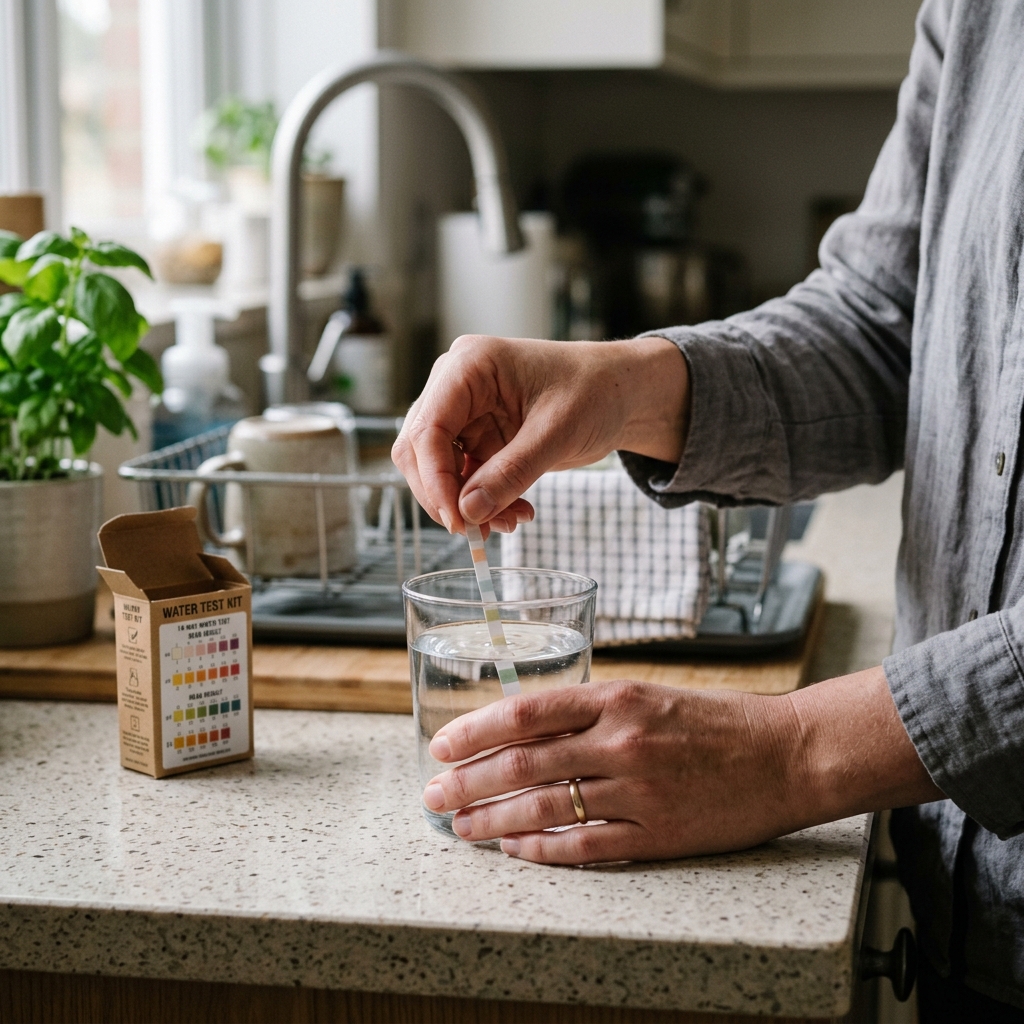
Basic test strips ($15-30): Cover pH, hardness, chlorine, lead, bacteria, pesticides, and nitrates. Good for a quick overview. Brands like Varify and Health Metric offer 16-in-1 strips available on Amazon.
Lab analysis ($100-300): Send a water sample to a certified lab for comprehensive testing including PFAS, heavy metals, and VOCs. Tap Score by SimpleWater is one well-reviewed option that provides results within two weeks.
Filtration: What Actually Removes What
Not all water filters target the same contaminants. Here’s what each type handles:
Activated carbon filters (Brita, PUR pitchers): Remove chlorine taste, some VOCs, and limited lead. Do not remove PFAS, fluoride, nitrates, or microplastics effectively. Cost: $25-40 for the pitcher, $5-8 per replacement filter.
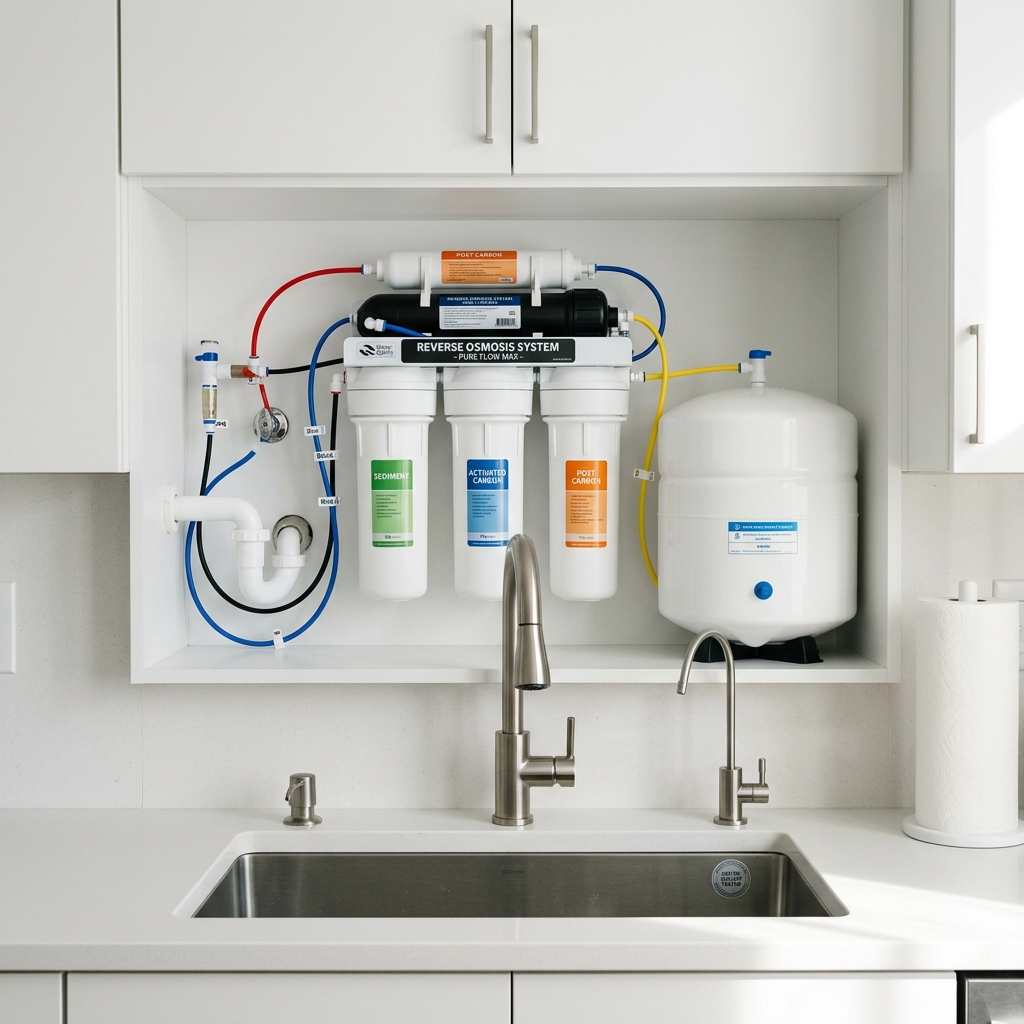
Reverse osmosis (RO) systems (Aquasana OptimH2O, APEC): Remove 95-99% of contaminants including PFAS, lead, arsenic, nitrates, and microplastics. Require under-sink installation. Cost: $200-400 for the system, $50-80/year in replacement filters.
Whole-house systems: Filter water at the point of entry. Useful if you’re concerned about contaminants in shower water and cooking water, not just drinking water. Cost: $800-2,000+ installed.
For most households, an under-sink RO system offers the best balance of thoroughness and cost. Aquasana’s OptimH2O, for example, is NSF-certified to remove 88 contaminants including PFAS, lead, and chloramine. It runs about $250 and fits under a standard kitchen sink.
Bottled Water Isn’t the Answer
Switching to bottled water sounds like the obvious fix. It isn’t. A 2024 study by Columbia and Rutgers found roughly 240,000 nanoplastic fragments per liter in three popular bottled water brands. That’s 10-100x more microplastic than what’s typically found in tap water.
Bottled water is also regulated by the FDA (not the EPA), with less frequent testing requirements. And the environmental cost of plastic production and disposal adds up fast when you’re buying cases weekly.
Filtering your own tap water with a quality system gives you better water quality than most bottled options, at a fraction of the long-term cost.
What to Do Right Now
If you’ve read this far and want to take action, here’s a practical starting point:
- Read your CCR: Find it at your water utility’s website or EPA.gov/ccr. Look specifically at lead levels, THM/HAA levels, and any violations.
- Run your tap for 30 seconds: If your home has old pipes, flushing the line before drinking reduces lead exposure. It’s free and takes half a minute.
- Test your water at home: A $20 test strip kit will tell you if anything obvious is off.
- Consider a filter: If your area has known PFAS or lead issues, an under-sink RO system is the most effective household-level solution.
FAQ
Is filtered tap water better than bottled water?
In most cases, yes. A quality reverse osmosis or activated carbon filter removes more contaminants than standard bottled water processing. Bottled water also contains significantly more microplastics than filtered tap water.
How do I know if my tap water has lead?
Your annual water quality report shows lead levels at the treatment plant. For your actual faucet levels, use a home test kit or send a sample to a certified lab. Homes built before 1986 are more likely to have lead solder or service lines.
Do Brita filters remove PFAS?
Standard Brita pitcher filters reduce some PFAS but do not eliminate them. For comprehensive PFAS removal, you need a reverse osmosis system or a filter specifically NSF-certified for PFAS reduction (NSF P473 or NSF 53).
How often should I replace my water filter?
Follow the manufacturer’s schedule. For most pitcher filters, that’s every 2-3 months. Under-sink RO membranes typically last 12-24 months, with pre-filters replaced every 6-12 months. Using an expired filter can actually make water quality worse by releasing trapped contaminants.