
Last updated: May 2026. This article is reviewed quarterly.
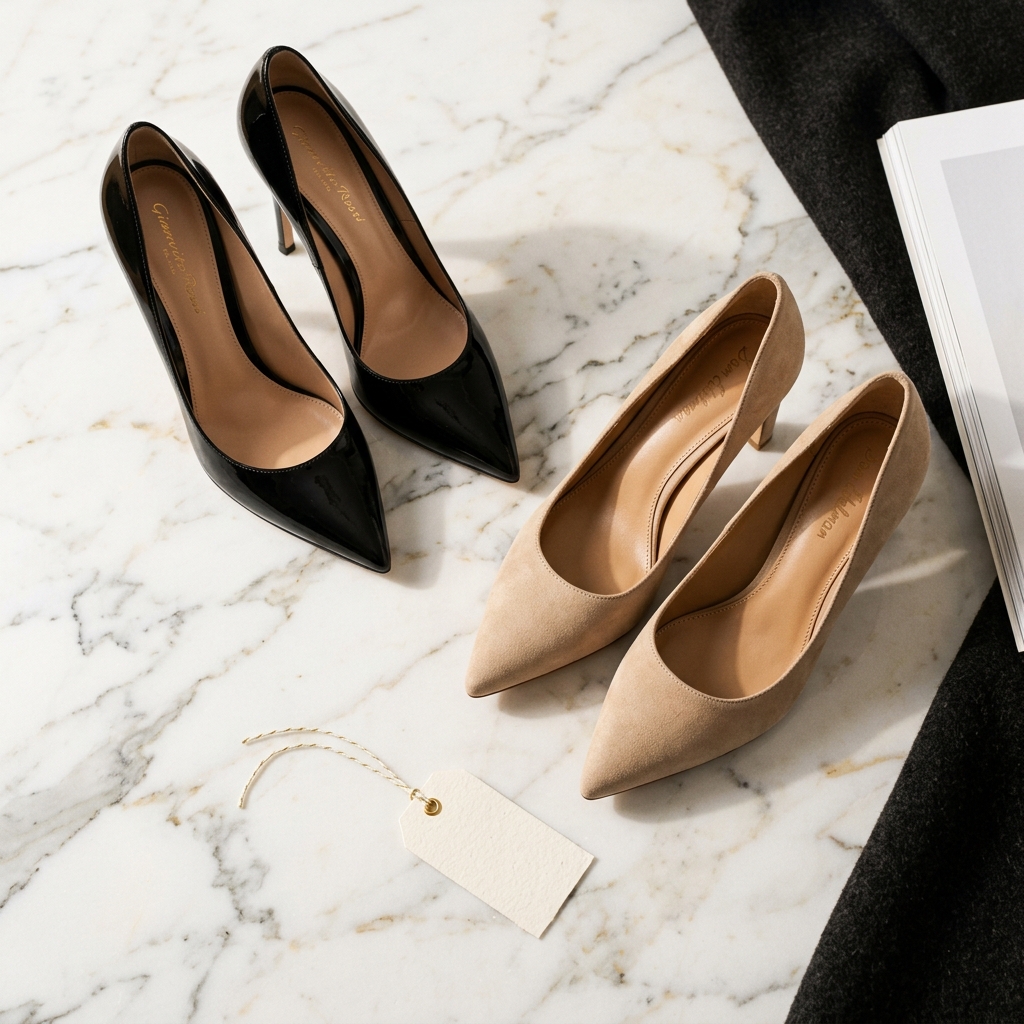
A pair of Jimmy Choo Romy pumps costs $675. A pair of Sam Edelman Hazel pumps costs $150. Both are pointed-toe stilettos in patent leather. The price gap is $525. The question every shoe shopper eventually asks: where does that money actually go?
After spending time in luxury shoe departments, reading cobbler forums, and tracking how different price tiers hold up over months of wear, the answer is more complicated than “you get what you pay for.” Sometimes you do. Sometimes you’re paying for a logo and a zipcode.
This guide breaks down exactly what to look for when evaluating designer shoes, so you can decide for yourself whether the premium is justified.
This article contains affiliate links. If you purchase through our links, we may earn a small commission at no extra cost to you. See our full disclosure.
The Five Things You’re Actually Paying For
When you spend $500+ on shoes, the price includes some combination of these five factors. Not every designer shoe delivers on all of them.
1. Material Quality
The biggest tangible difference between a $100 shoe and a $600 shoe is usually the leather. Full-grain Italian or Spanish leather costs roughly 4-6x more than the corrected-grain or bonded leather used in mass-market shoes. You can feel the difference: full-grain leather is softer, molds to your foot over time, and develops a patina instead of cracking.
Jimmy Choo primarily uses Italian-sourced leather and suede. The nappa leather on their classic pumps is noticeably softer than what you’ll find in department store brands. That said, not every Jimmy Choo model uses premium materials. Their crystal-embellished styles, for instance, sometimes prioritize decoration over leather grade.
2. Construction Method
Mass-market shoes are typically cemented (glued). Designer shoes may use Blake stitching, Goodyear welt, or Bologna construction, which allows resoling and extends the shoe’s lifespan by years. A Goodyear-welted dress shoe can be resoled five or six times over its lifetime, potentially lasting a decade with proper care.
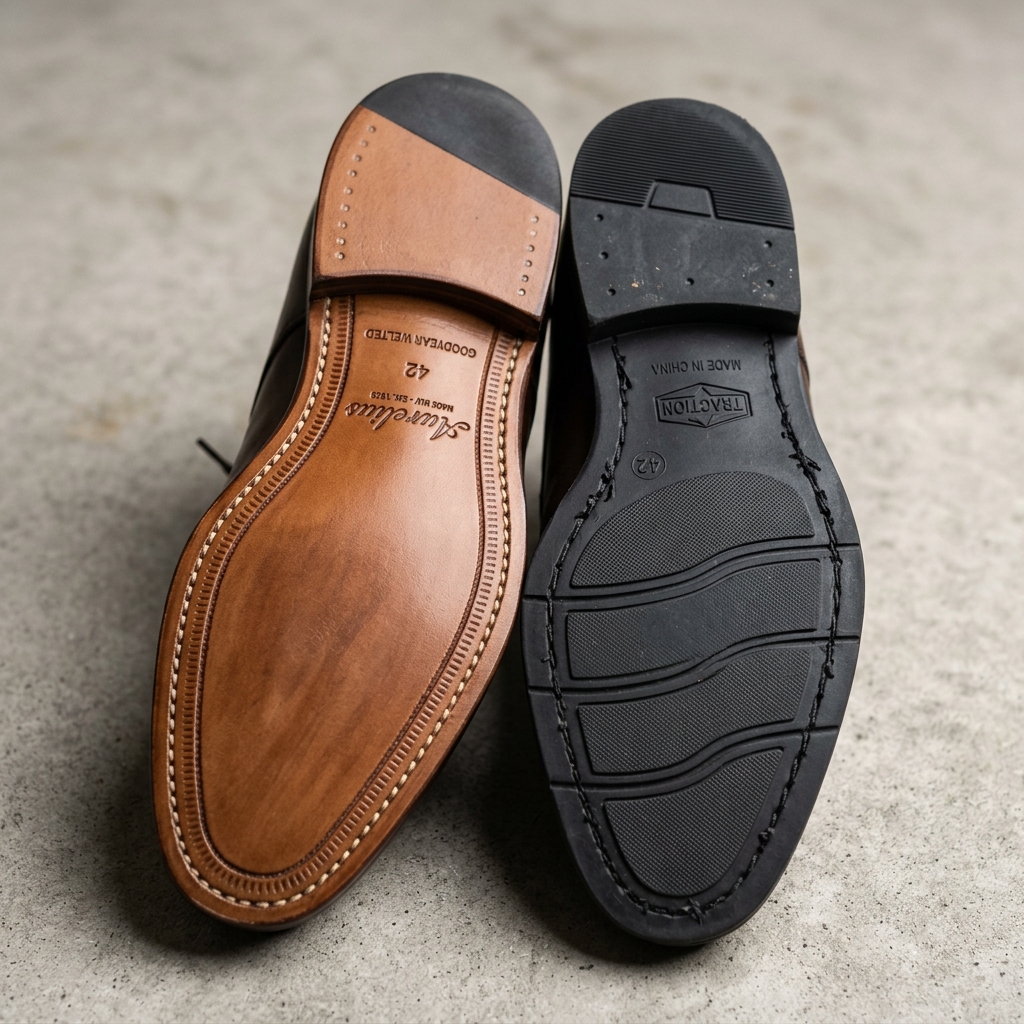
The catch: many designer heels (including some Jimmy Choo styles) still use cement construction. Heels are structurally different from men’s dress shoes, and the thin profile limits construction options. Don’t assume “designer” automatically means “resoleable.”
3. Fit Engineering
This is where opinions diverge sharply. Across Reddit threads from 2024-2025, Jimmy Choo owners describe wildly different experiences. Some professionals call the Romy their “holy grail” work pump, comfortable enough for long days at the office. Others describe them as “purgatory,” noting the narrow toe box is torture for wider feet.
The lesson here is that fit engineering at the luxury level is often optimized for a specific foot shape, not every foot. A $675 shoe that doesn’t match your foot shape will be less comfortable than a $90 shoe that does.
4. The Brand Premium
Be honest with yourself about this one. A portion of every luxury purchase pays for the brand name, the store experience, the packaging, and the social signal. At Jimmy Choo, industry analysts estimate the brand premium accounts for 30-40% of the retail price. At some fashion houses, it’s higher.
This isn’t inherently bad. If wearing a specific brand genuinely makes you happy, that’s a valid purchase reason. Just don’t confuse brand premium with quality premium.
5. Where It’s Made
“Made in Italy” carries weight in footwear, and for good reason. Italian shoe factories have generations of specialized expertise, stricter quality standards, and access to the best European leather suppliers. Most Jimmy Choo shoes are manufactured in Italy, though some styles are produced elsewhere.
That said, “Made in Italy” is not a guarantee of quality. Some Italian factories produce both luxury and budget lines under the same roof. And excellent shoes come from Spain, Portugal, and even some factories in Asia. Country of origin is a data point, not a verdict.
The Real-World Durability Question
Here’s where the Reddit crowd gets blunt. Recent reviews across multiple platforms flag a recurring issue with Jimmy Choo: quality control inconsistency. Complaints include sole peeling, uneven stitching, and decorative elements falling off after minimal wear. Long-time fans note the brand may have dipped in reliability compared to earlier years.
The community advice? Treat designer heels as luxury items for specific occasions, not as daily workhorses. And factor in ongoing maintenance costs: a cobbler visit for rubber sole taps ($25-40), leather conditioning supplies ($15-20), and eventual resoling ($50-100) are all part of the true cost of ownership.

The Price-to-Quality Sweet Spot
Based on construction quality, material grade, and real-world durability, the best value in women’s shoes typically falls in the $200-400 range. Brands in this tier include:
Stuart Weitzman: Known for comfort engineering in heels. Their 5050 boot is famous for lasting years with minimal maintenance. Generally consistent quality.
Aquazzura: Italian-made with excellent leather quality. Less brand premium than Jimmy Choo, similar (and sometimes superior) craftsmanship.
Sam Edelman (high-end line): Their $150-200 range offers surprisingly good leather and construction for the price. Not luxury, but solidly built.
Loeffler Randall: A favorite among fashion editors for balancing design with wearability. Their $350-450 range competes with shoes twice the price on construction.
How to Evaluate Any Shoe in 60 Seconds
Whether you’re spending $100 or $1,000, check these things before buying:
- Flex the sole: A quality sole bends at the ball of the foot but resists bending in the arch. If it folds in half easily, the support is minimal.
- Check the lining: Leather lining breathes and molds to your foot. Synthetic lining traps heat and can cause blisters. Run your finger inside the shoe.
- Inspect the stitching: Even, consistent stitches with no loose threads. On welted shoes, the welt stitching should be tight and uniform.
- Smell the leather: Real leather has a distinct, rich smell. Synthetic leather smells like chemicals or nothing at all.
The Verdict: When Designer Is Worth It
Worth the splurge: If you’ve tried a specific style in-store, it fits your foot perfectly, and you plan to maintain it properly. Also worth it if you’re buying classic, simple designs (pumps, loafers, boots) that won’t go out of style.
Not worth it: If you’re buying online without trying them, if you want trendy styles you’ll wear one season, or if the main draw is the brand name rather than the shoe itself.
The smartest approach may be the one the Reddit community keeps recommending: buy designer shoes secondhand through authenticated resale platforms like The RealReal or Vestiaire Collective. You get the material quality and design at 40-60% off retail, which puts the price much closer to the actual cost of the craftsmanship.
FAQ
How long should a pair of designer shoes last?
With proper care (shoe trees, leather conditioning, professional resoling), a well-made designer shoe can last 5-10 years of regular wear. Without maintenance, expect 2-4 years, which isn’t dramatically different from mid-range brands.
Are designer shoes more comfortable than cheap ones?
Not automatically. Comfort depends on fit, not price. A $70 shoe that matches your foot shape will feel better than a $700 shoe that doesn’t. Always try before you buy, especially with narrow-cut European luxury brands.
Is it worth getting designer shoes resoled?
If the upper leather is in good condition, absolutely. A professional resole costs $50-100 and adds years to the shoe’s life. It’s almost always cheaper than buying new.
What’s the best way to protect designer shoe soles?
Add rubber sole protectors (taps) immediately after purchase. A cobbler charges $25-40, and it prevents the leather sole from wearing through on pavement. Many boutique staff recommend this as well.