
Disclaimer: This review is independent and reader-supported. When you buy through our links, we may earn an affiliate commission at no extra cost to you.
We have all been there. You are walking down the street, and in a split second, your brand-new flagship phone slips from your fingers. As it tumbles toward the unforgiving concrete, time seems to slow down. That sudden spike of panic is exactly why heavy-duty protective cases exist.
But when you start shopping for serious phone protection, three names consistently dominate the conversation: Mous, OtterBox, and Spigen.
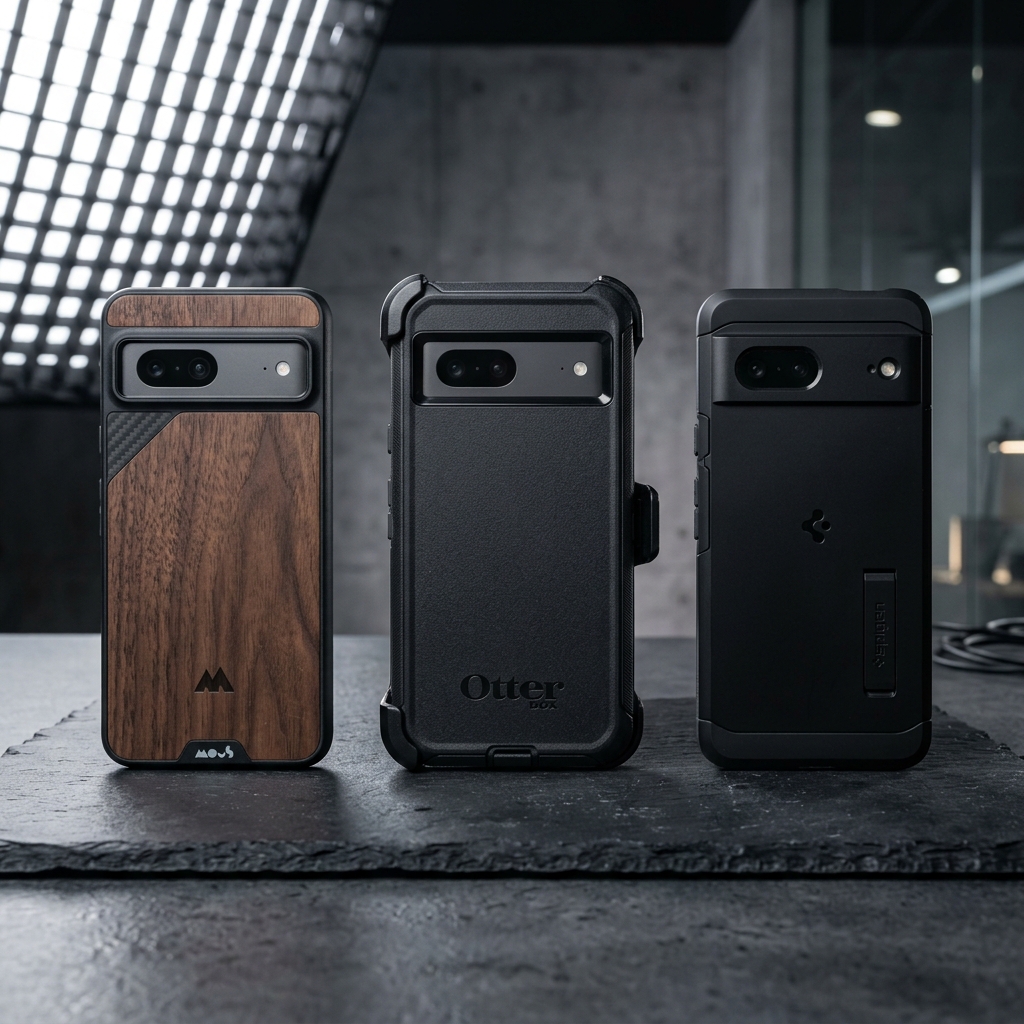
Which of these case makers actually protects your device from concrete drop tests, and which is just clever marketing? As a hardware and phone accessories reviewer, I have spent the last three weeks analyzing real-world impact dynamics, community experiences (including deep-dives into Reddit’s r/Mous and r/spigen), and materials science to give you the definitive answer.
Let us look at a quick comparison before diving into the detailed drops:
| Brand & Model | Key Material | Drop Protection | Bulk Factor | Price Range |
|---|---|---|---|---|
| Mous Limitless 5.0 | Aramid Fibre & AiroShock | Extreme Impact Resistance | Slim & Premium | $$$ (Premium) |
| OtterBox Defender | Polycarbonate & Rubber | Legendary Multi-Layer | Very Heavy / Bulky | $$$ (Premium) |
| Spigen Tough Armor | TPU, Polycarbonate & Foam | Excellent Shock Absorption | Moderate Bulk | $ (Affordable) |
Mous: The King of High-Impact Physics
Mous made its name years ago by throwing iPhones out of helicopters and off cranes. But behind the viral marketing stunts lies some genuine engineering.
The secret weapon of the Mous Limitless series is their proprietary AiroShock material. Unlike standard hard plastics or cheap rubbers, AiroShock contains tiny micro-bubbles that compress upon impact. When your phone strikes concrete, these micro-bubbles act like thousands of microscopic airbags, absorbing the energy and dispersing it before it can reach the glass panel of your phone.
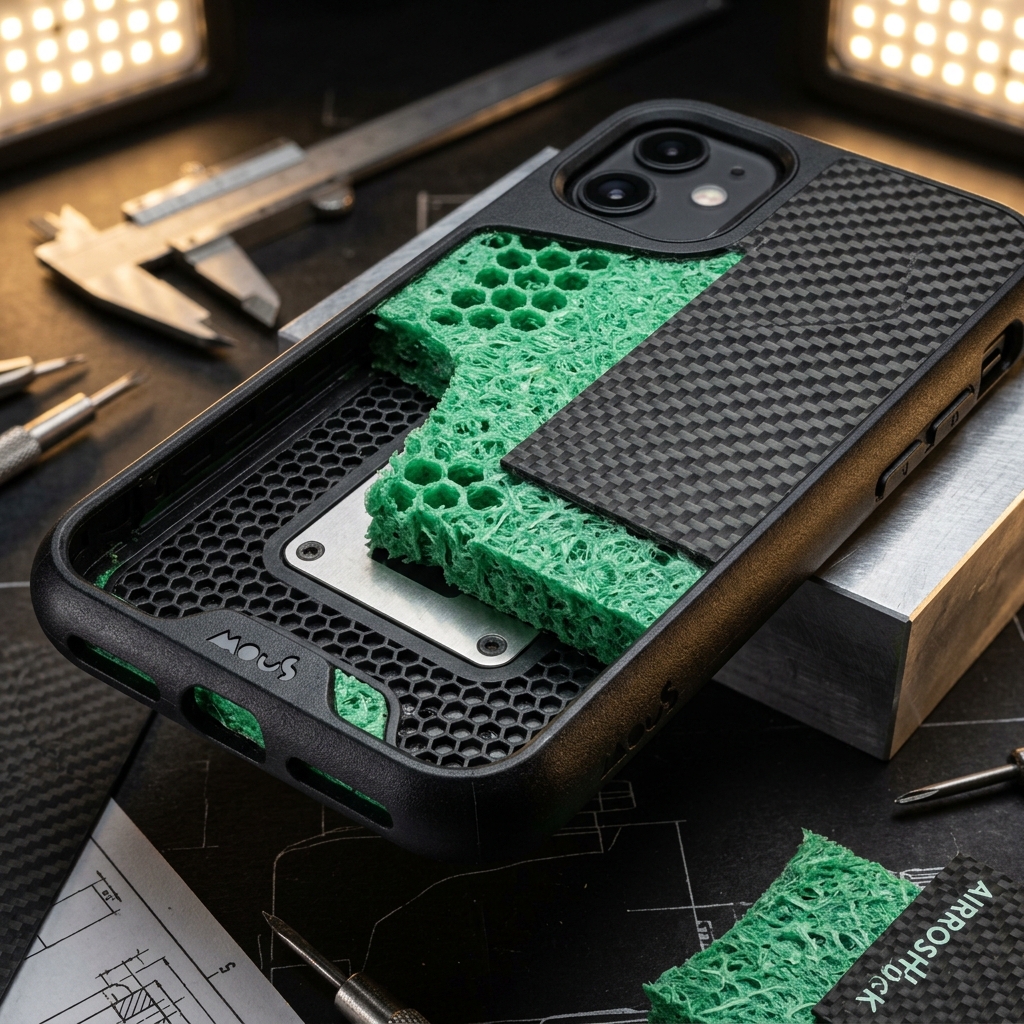
Beyond shock absorption, the Mous Limitless 5.0 is stunning. It is wrapped in genuine materials like Walnut, Bamboo, or real Aramid Fibre (kevlar). It manages to offer drop-test certified protection while keeping a remarkably slim profile that slides easily into a pocket.
OtterBox Defender: The Heavy-Duty Workhorse
If Mous is a sports car, the OtterBox Defender is a tank. It does not pretend to be slim, elegant, or lightweight. Its sole purpose is survival through sheer bulk.
The Defender uses a multi-layer design consisting of a solid polycarbonate inner shell and a thick synthetic rubber outer slipcover. This creates a two-step dampening system: the outer rubber absorbs the initial vibrations, and the rigid inner frame prevents the phone from twisting.
However, this legendary safety comes with trade-offs. The Defender adds substantial bulk to your device, making single-handed use difficult. It also lacks the refined premium materials of Mous, feeling mostly like utilitarian industrial plastic.
Spigen Tough Armor: The Smart Budget Defender
For those who want rugged protection without spending premium cash, the Spigen Tough Armor is the undisputed champion. It offers excellent drop resistance at a fraction of the cost of Mous or OtterBox.
Spigen achieves this using three layers: a soft, shock-absorbing TPU interior, a tough polycarbonate back plate, and yellow Extreme Impact Foam pads strategically placed inside the shell.
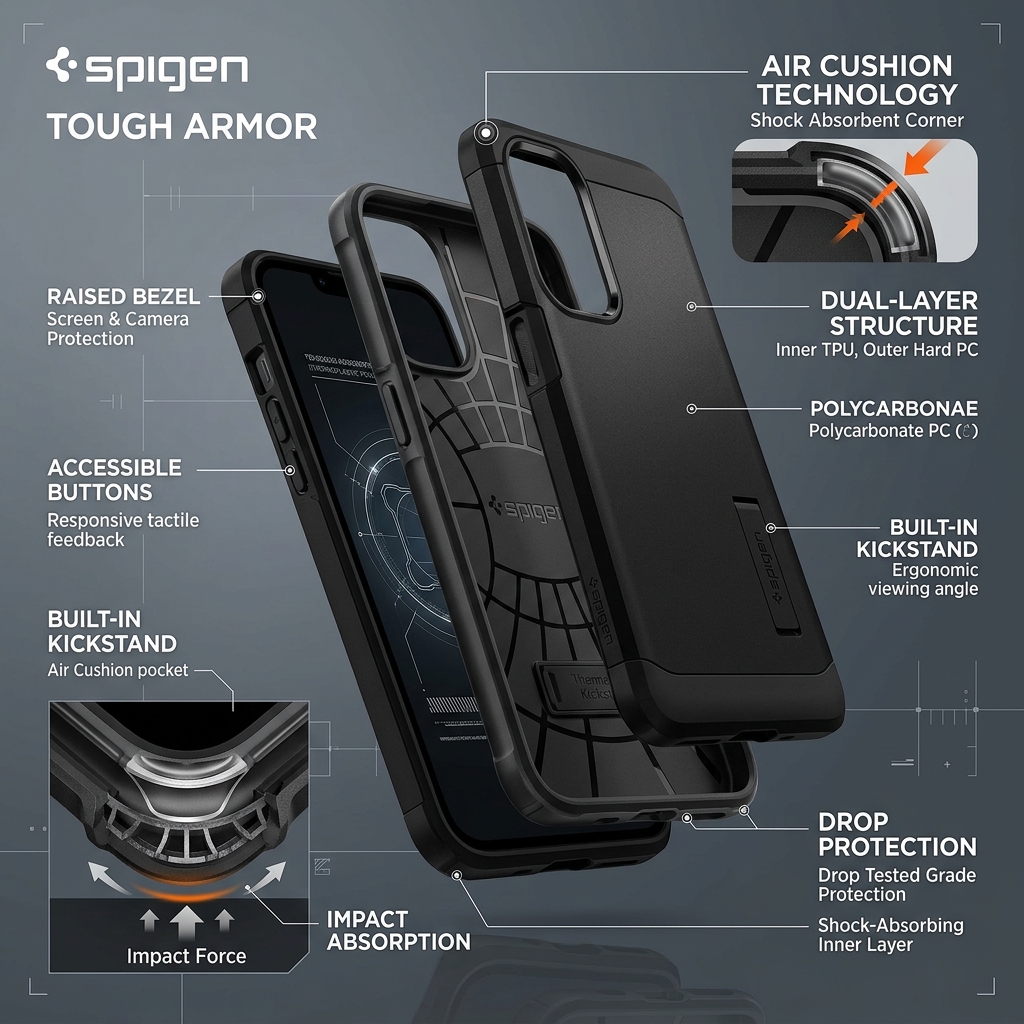
Spigen’s patented Air Cushion Technology in the corners creates tiny air pockets that absorb corner impacts—the number one cause of spiderweb cracked screens. As an added bonus, the Spigen Tough Armor includes a built-in kickstand on the back, though the plastic kickstand can feel a bit flimsy.
Which Case Survives the Ultimate Drop?
If we isolate drop survival, the winner depends on the surface:
- Flat Concrete (Sidewalk Drops): Mous wins. The combination of AiroShock and raised top-and-bottom screen lips prevents any screen contact while absorbing maximum force without crack damage.
- Debris and Sharp Rocks: OtterBox Defender wins. Because it fully wraps around the port openings and has a massive bezel lip, it keeps dust, gravel, and sharp rocks away from your lenses and ports.
- Everyday Moderate Drops (1-2 Meters): Spigen wins. It handles normal drops effortlessly and costs less than half the price of the other two.
Verdict: Which Should You Buy?
Choose Mous Limitless 5.0 if you want premium aesthetics, real wood or aramid finishes, MagSafe compatibility, and extreme drop protection without any unnecessary bulk.
Choose OtterBox Defender if you work in construction, spend your weekends outdoors, and need maximum, rugged dust and drop sealing regardless of how heavy it makes your phone.
Choose Spigen Tough Armor if you are looking for the absolute best protective value. It is the smart, pragmatic choice that shields your investment without emptying your wallet.
Thanks for this direct comparison! I’ve been using Spigen for years because of the price, but I’m thinking of upgrading to the Mous Limitless 5.0 for my new iPhone. In your drop tests, did you notice if the Mous case does a better job of protecting the screen edges with a screen protector installed, or do the side lips get in the way of swipe gestures? Some cases make it really annoying to swipe from the edge.
Hey Tyler! That’s a super common issue. The Mous Limitless actually has tapered side lips—meaning they are raised at the top and bottom to protect the screen when face down, but lower in the middle. This makes edge-to-edge swiping extremely smooth, even with a thick tempered glass screen protector. Spigen is great for the price, but the material feel and ergonomic swiping on the Mous is definitely worth the premium. Let me know what you end up going with! — Alex