
We only notice home technology when it fails. A perfect ceiling fan is designed to be completely forgotten. It hangs silently overhead, blending into the plaster, regulating the climate of our sanctuary without making a sound.
But when a fan is poorly engineered, it demands your attention in the worst ways possible. It clicks. It wobbles. It hums with a mechanical vibration that turns a peaceful Sunday afternoon into a slow-burn psychological torture.
Suddenly, you realize that a ceiling fan is not just an appliance; it is an architectural anchor that dictates the sensory comfort of your entire living room.
When you decide to invest in a fan, you are faced with a stark market division. Do you buy the cheap, mass-market retail option? The solid, historical mid-range workhorse? Or do you pay a premium for designer, high-efficiency engineering?
To help you design a truly quiet, comfortable living space, we compared the three giants of home ventilation: Hampton Bay, Hunter Fan, and Minka-Aire.
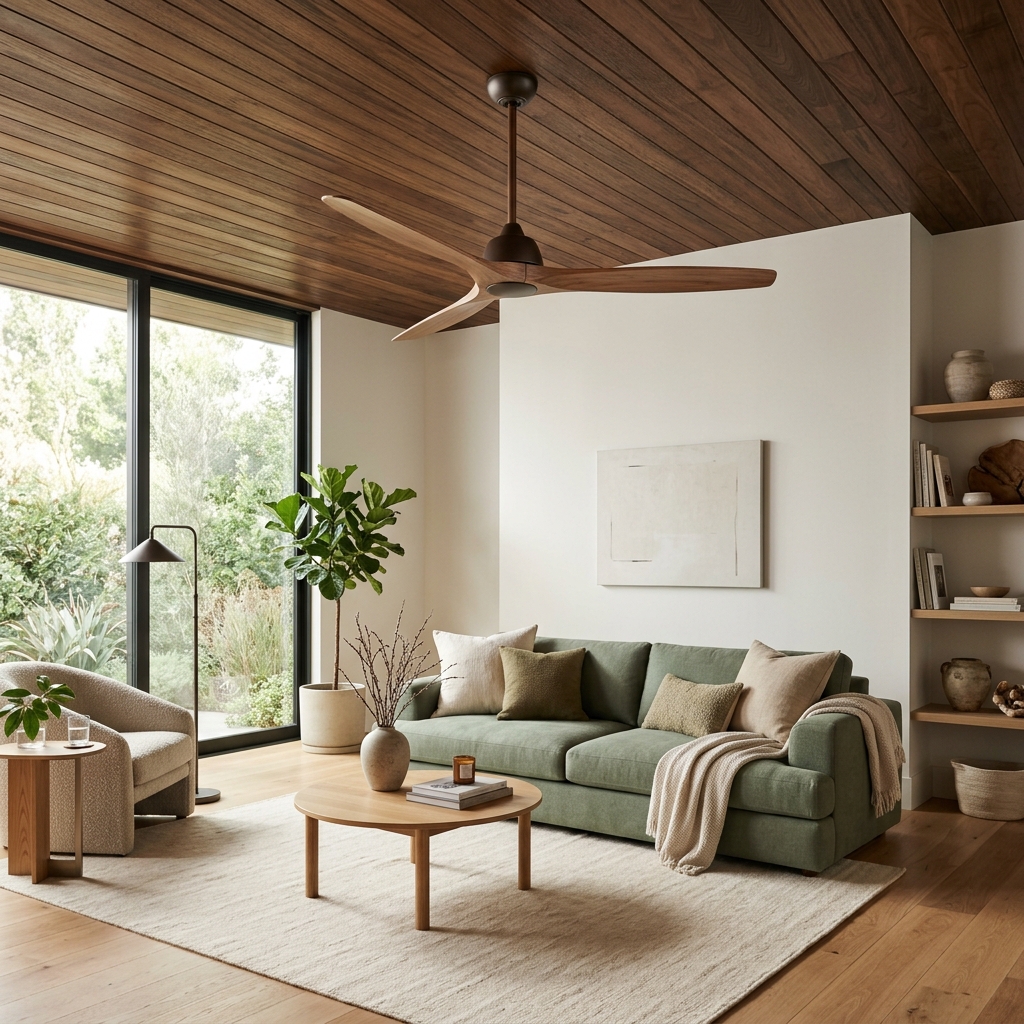
The Hidden Philosophy of the “Ready-to-Hand”
Why does a clicking ceiling fan feel so incredibly invasive? German philosopher Martin Heidegger analyzed our relationship with tools and technology using two concepts: the ready-to-hand (zuhanden) and the present-at-hand (vorhanden).
When a tool works perfectly, it is ready-to-hand. It becomes an extension of our body, completely transparent. When you write with a pen, you don’t think about the ink flow; you think about the words.
A perfect ceiling fan is the ultimate ready-to-hand technology. It disappears into the background of our lives, maintaining our home’s comfort silently.
But the moment the fan begins to wobble, squeak, or hum, it breaks. Heidegger called this the present-at-hand state. The illusion of comfort is shattered. You are suddenly forced to look at the fan, to listen to the fan, to worry about the fan.
Buying a high-quality ceiling fan is not about showing off wealth; it is about protecting the ready-to-hand harmony of your home.
The Competitors: Three Tiered Philosophies
To choose the right fan, we must evaluate the build quality and engineering of our three competitors.
1. Hampton Bay: The Mass-Market Entry
* The Position: The budget brand exclusive to Home Depot.
* The Focus: Utilitarian affordability.
* Airflow Reality: Hampton Bay is the default option for landlords and quick renovations. While they offer incredibly low entry prices, their AC motors are prone to developing hums over time, and their blades are frequently made of cheaper, compressed particleboard that can warp in humid environments, causing wobbling.
2. Hunter Fan: The Historic Workhorse
* The Position: The mid-range champion with over 135 years of history.
* The Focus: Quiet, reliable performance.
* Airflow Reality: Hunter is a reliable middle-ground choice. However, Reddit users consistently point out a critical distinction: the Hunter fans sold at electrical wholesale specialty stores are built to a much higher standard than the cheaper, plastic-heavy models exclusive to big-box retail stores. Their WhisperWind AC motors are legendary for quiet operation.
3. Minka-Aire: The Designer Powerhouse
* The Position: High-end architectural ventilation.
* The Focus: Sleek modern aesthetics and high-efficiency DC motors.
Airflow Reality: Minka-Aire is the enthusiast’s choice. They pioneered the use of three-blade, aerodynamic molded polymer blades (like the legendary Artemis and Roto* models) that move massive volumes of air with virtually zero wind noise. They utilize compact, highly efficient DC motors that are fundamentally quieter than traditional AC motors.
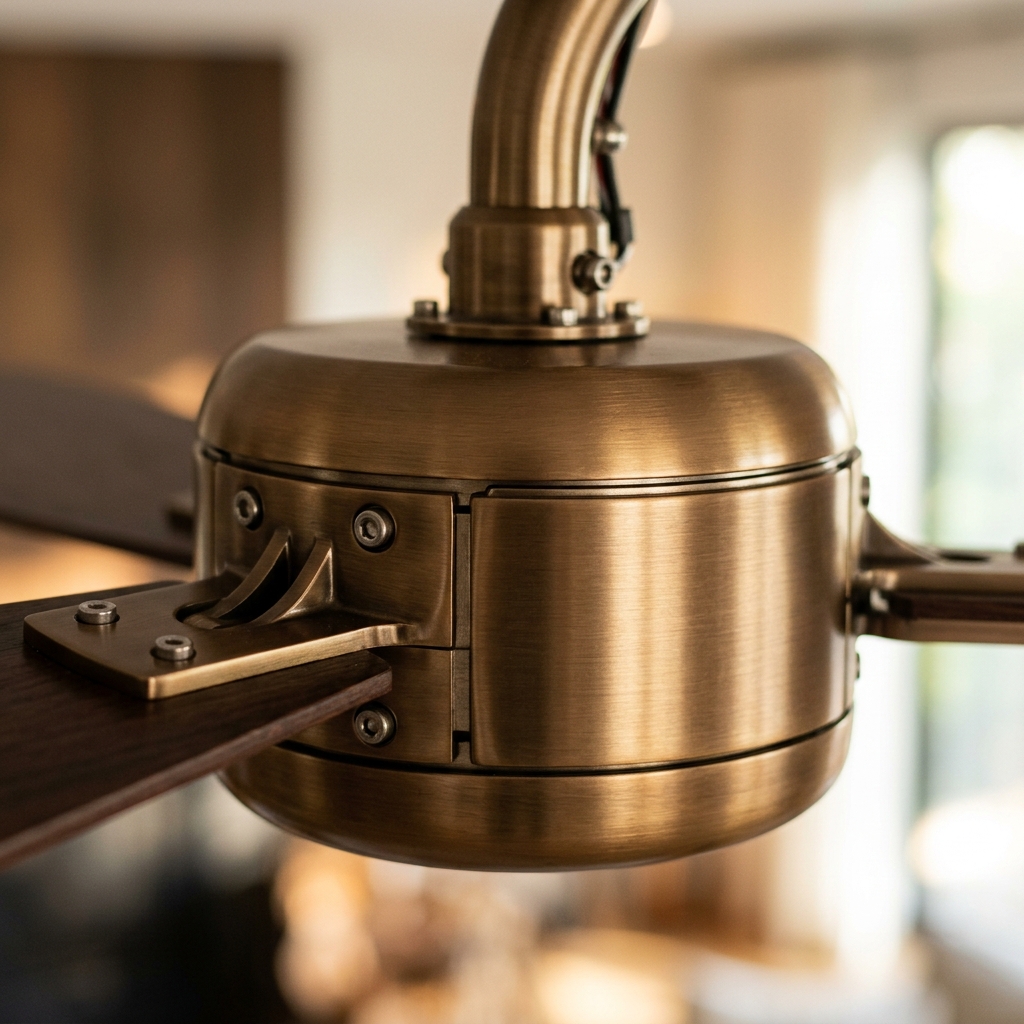
The Motor Debate: DC vs. AC
If you want a truly silent living room, the single most important decision you will make is choosing between an AC (Alternating Current) and a DC (Direct Current) motor.
Traditional AC motors (found in almost all Hampton Bay and budget Hunter models) rely on alternating magnetic fields to spin the rotor. While reliable, this constant shifting of electrical current creates a low-frequency hum that can resonate through the ceiling joists, especially at low speeds in a quiet room.
Modern DC motors (standard in Minka-Aire and premium Hunter lines) convert AC power to DC inside the fan, allowing for incredibly precise control over the magnetic fields.
The benefits are game-changing:
* Near-Silent Operation: DC motors are virtually silent, making them perfect for bedrooms and quiet living spaces.
* Energy Efficiency: They use up to 70% less electricity than traditional AC motors.
* Speed Control: They typically offer 6 distinct speeds instead of the standard 3.
While DC fans cost more upfront, the complete lack of motor hum makes them the only choice for light sleepers or those highly sensitive to background noise.

The Technical Specs: CFM and Efficiency
Let us lay out the technical performance metrics of these three brands to see what you actually get for your investment.
| Feature | Hampton Bay | Hunter Fan (Mid-Range) | Minka-Aire (Premium) |
|---|---|---|---|
| Motor Type | Traditional AC | WhisperWind AC / DC | High-Efficiency DC |
| Blade Material | Particleboard / Plastic | Wood / Engineered MDF | Molded ABS Polymer |
| Quietness | Low-to-Moderate (Hum prone) | High | Exceptional (Virtually silent) |
| Average CFM | 3,500 – 4,500 | 4,500 – 5,500 | 5,500 – 7,000+ |
| Best For | Low-stakes rental properties | Standard family living rooms | Modern high-ceiling spaces |
The Verdict: Which Fan Wins?
The air quality and noise level of your living room dictate the comfort of your entire life. Choose the brand that supports your home’s ready-to-hand harmony:
If you are looking for architectural beauty, premium materials, and absolute silence, Minka-Aire is the undisputed winner. Its use of high-efficiency DC motors and aerodynamic molded blades allows it to move massive amounts of air without ever introducing mechanical noise or ceiling wobbles into your space.
If you want a solid, highly reliable, and classic family workhorse that will last for decades without breaking the bank, Hunter Fan is a incredibly safe, highly respectable choice. Just be sure to purchase their premium or wholesale models to avoid big-box store quality downgrades.
If you are working on a strict budget, outfitting a rental unit, or simply need a functional fan for a space you rarely use, Hampton Bay offers the most affordable entry point. Just be prepared to spend extra time balancing the blades during installation to prevent wobbling.
What is your living room style? Do you prefer a classic, heavy wooden fan or a sleek, modern three-blade aerodynamic statement? Let us know in the comments below.