
Last updated: June 2026. This article is reviewed quarterly.
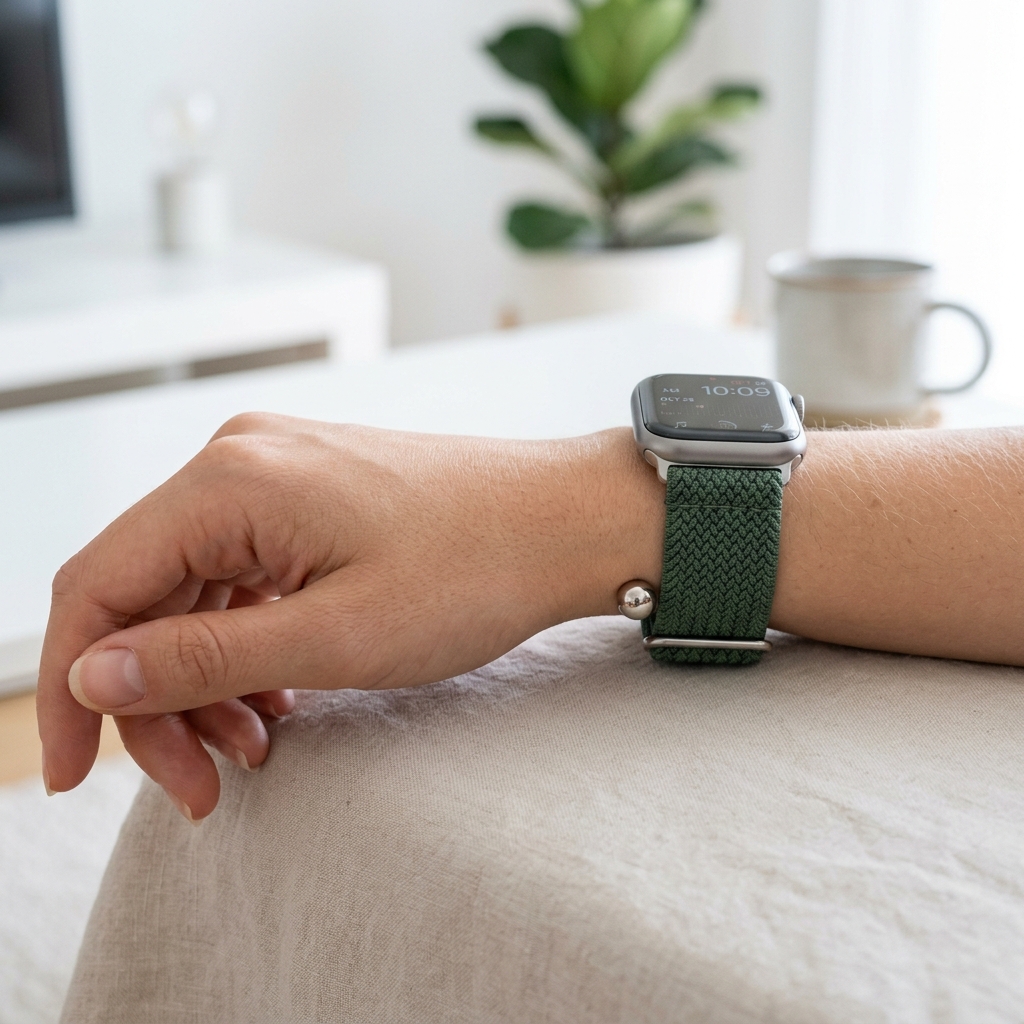
In the search for anxiety relief, consumers are frequently targeted by products promising quick, non-invasive solutions. From weighted blankets to aromatherapy patches, the wellness market is filled with tools designed to calm the nervous system. Recently, acupressure watch bands, such as those made by Solace Bands, have gained popularity by claiming to reduce stress and anxiety using simple wrist pressure.
To many, the idea that a small bead pressed against your wrist can calm a racing mind sounds like pseudoscience. Yet, traditional Chinese medicine has relied on these specific pressure points for thousands of years.
Is there genuine clinical science behind these wearable bands, or are they simply modern placebo bracelets?
Our wellness editor Sarah Jenkins examined the physiological mechanisms of acupressure, reviewed clinical studies on wrist stimulation, and wore an acupressure band during high-stress workdays. Here is our science-backed analysis.
—
Acupressure Bands: Design and Specs
Before reviewing the science, let’s look at how these wellness watch bands are constructed.
| Feature | Specs |
| :— | :— |
| Retail Price | $29.00 to $45.00 |
| Material | Elastic nylon, silicone, or leather with embedded pressure beads |
| Primary Target Point | Neiguan Point (Pericardium 6 or P6) |
| Secondary Target Point| Shenmen Point (Heart 7 or HT7) |
| Compatibility | Standalone bands or replacement bands for Apple Watch/Fitbit |
Unlike standard watch bands, these wellness bands feature one or two rounded beads on the underside. When worn, these beads press directly into the soft tissue of the inner wrist, providing constant stimulation to specific neurological pathways.
—
The Biological Theory: The Neiguan (P6) Acupoint
The foundation of acupressure bands is the stimulation of the Neiguan point, often referred to in clinical literature as Pericardium 6 (P6).
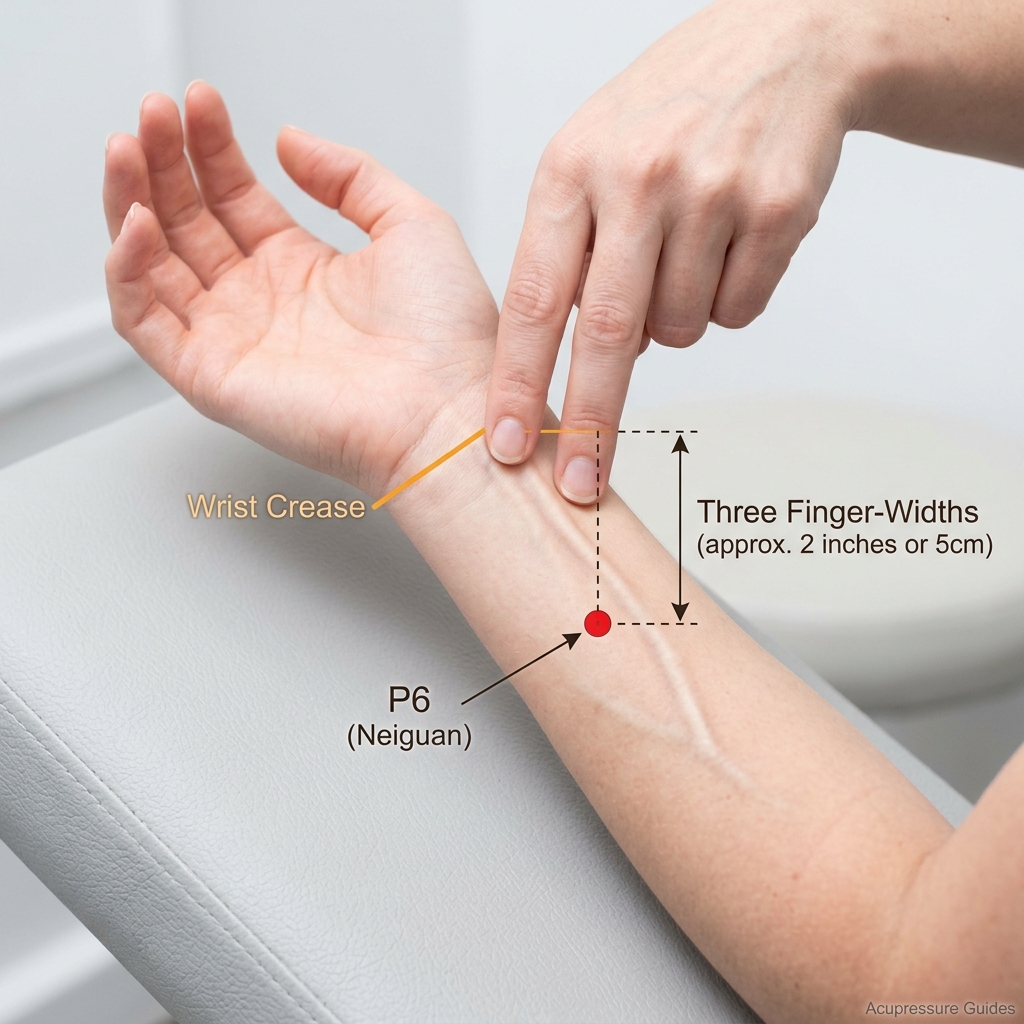
Located on the inner forearm, approximately three finger-widths below the wrist crease between the two major tendons, this point is connected to the median nerve. In traditional medicine, stimulating P6 is believed to calm the heart, regulate blood flow, and soothe the spirit.
Modern neurology offers a similar explanation. Pressing the median nerve sends signals to the brain that trigger the release of endorphins—the body’s natural pain-relieving and mood-elevating chemicals. This stimulation helps down-regulate the sympathetic nervous system (the “fight-or-flight” response), lowering heart rate and blood pressure.
—
What the Clinical Research Actually Shows
To separate marketing claims from clinical reality, we analyzed peer-reviewed studies on acupressure and wrist stimulation.
* Clinical Studies on Nausea and Nausea-Related Anxiety: There is strong clinical evidence showing that pressure on the P6 point reduces nausea and vomiting, particularly in post-surgery patients and pregnant women. Many of these studies also noted a significant drop in patient anxiety levels.
Pre-Procedural Anxiety Studies: A study published in the Journal of Acupuncture and Meridian Studies* evaluated the effects of acupressure on dental patients experiencing acute anxiety. The researchers observed that patients wearing active P6 acupressure bands showed a measurable decrease in heart rate and subjective anxiety compared to those wearing placebo bands.
* The Sizing and Placement Factor: For these bands to work, the bead must be aligned precisely on the P6 point. If the band is too loose or slides off the tendons, it provides no stimulation.
While these studies support the benefits of P6 stimulation, no large-scale clinical trials have validated commercial watch bands for treating generalized anxiety disorder. They are wellness tools, not medical devices.
—
Behavioral Grounding: The Cognitive-Behavioral Connection
Beyond neurology, these bands serve as a highly effective behavioral tool.
In cognitive behavioral therapy (CBT), patients are taught to use “grounding techniques” to manage panic attacks or sudden spikes in anxiety. Grounding involves focusing on a physical sensation to pull your mind away from negative thoughts.
An anxiety researcher discussed this grounding mechanism:
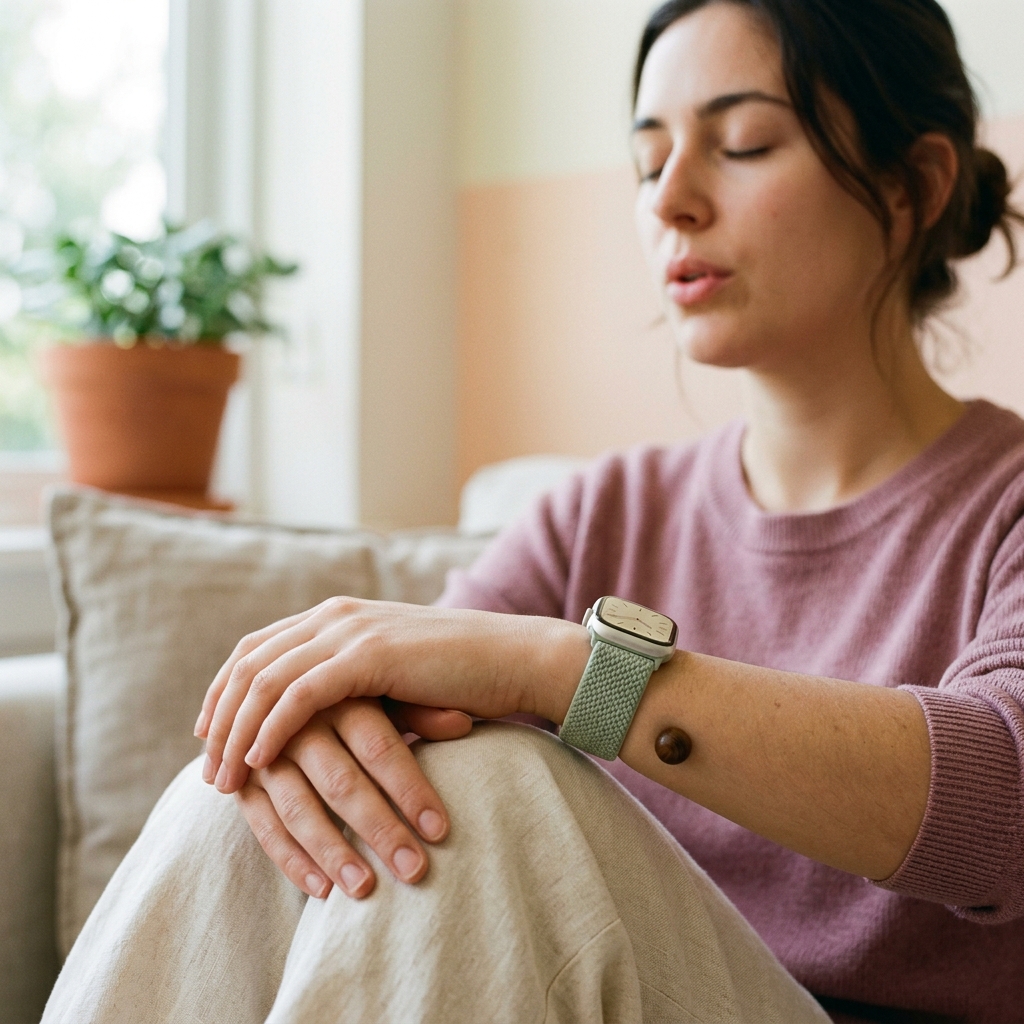
“The physical presence of the watch band acts as a tactile anchor. When a wearer begins to feel anxious, touching or pressing the bead provides a physical sensation that helps them ground themselves, serving as a reminder to practice deep breathing and mindfulness exercises.”
Having a constant, physical reminder on your wrist can help interrupt the cycle of anxious thinking before it escalates into a panic attack.
—
Sarah’s Final Recommendation
Acupressure watch bands are a safe, affordable, and practical addition to an anxiety management toolkit, but they are not a cure-all.
* Buy it if: You want a drug-free complementary tool to manage mild situational anxiety, need a physical grounding anchor, or are already wearing an Apple Watch.
* Skip it if: You expect the band to cure severe, chronic anxiety, find wrist pressure uncomfortable, or cannot keep the band aligned on the inner wrist.
If you decide to try one, ensure the band is snug but comfortable. If you experience skin irritation or numbness in your fingers, remove the band immediately.
—
Frequently Asked Questions
Can I wear an acupressure watch band all day?
Yes, but you should monitor your skin. It is best to wear it during high-stress periods, such as public speaking or commutes, rather than 24 hours a day, to prevent skin irritation from the pressure bead.
How do I find the correct pressure point?
Place three fingers horizontally across your inner wrist, starting at the crease. The P6 point is located just below your index finger, centered between the two prominent tendons in the middle of your forearm.