Last updated: May 2026. This article is reviewed quarterly.
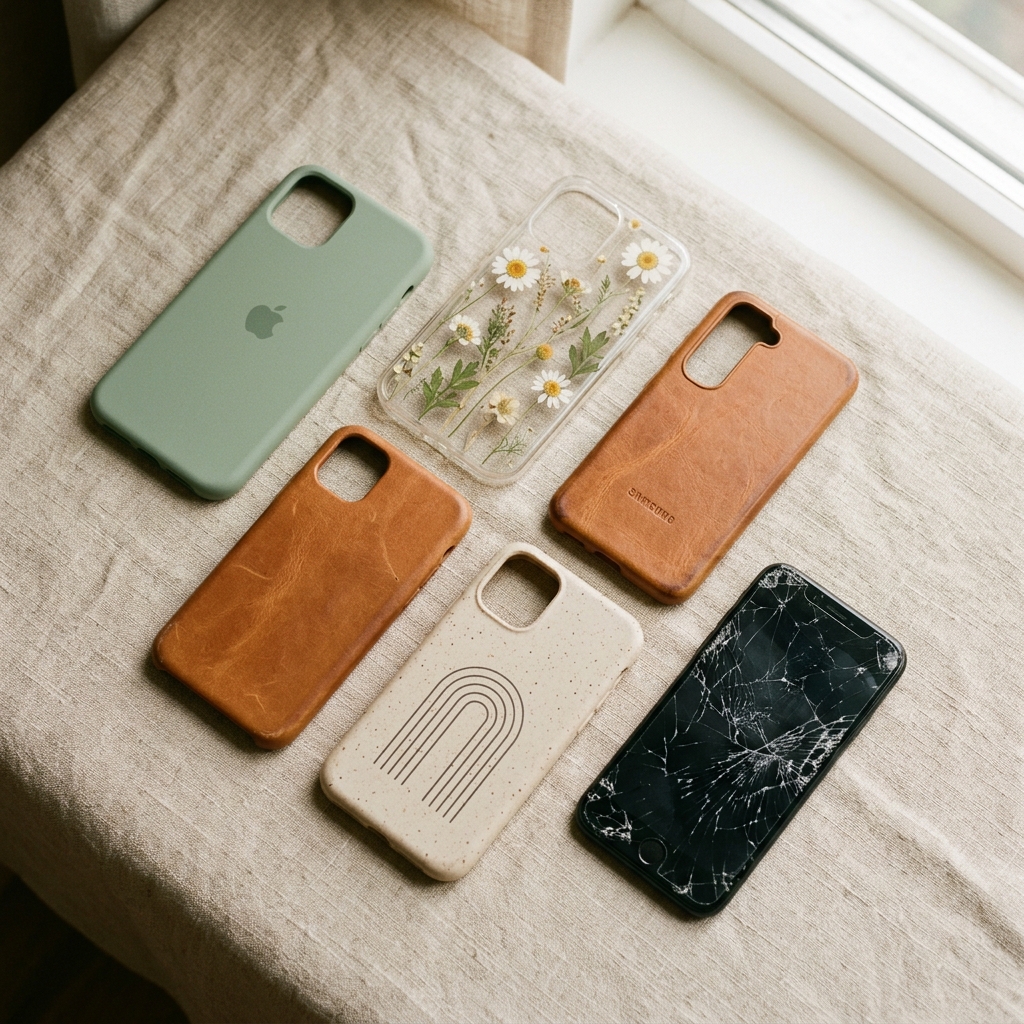
The average smartphone screen repair costs $279. At Apple, replacing an iPhone 16 Pro Max screen runs $379 before tax. And yet, around 38% of smartphone users still use either no case at all or a case that’s purely cosmetic, according to a 2024 survey by Asurion.
I’ve tested phone cases across four price tiers over the past two years, from $8 Amazon finds to $80 premium options from brands like Mous, OtterBox, and Spigen. The gap between “looks protective” and “actually protects” is wider than most people realize.
Here’s the short version: the case that saves your screen isn’t the thickest, the most expensive, or the one with the coolest marketing video. It’s the one with the right combination of four specific features that most shoppers never check.
This article contains affiliate links. If you purchase through our links, we may earn a small commission at no extra cost to you. See our full disclosure.
The Four Features That Actually Matter
Phone case marketing loves to throw around terms like “military-grade” and “drop-tested from 45 feet.” Those claims are mostly noise. When a phone lands face-down on concrete, four physical features determine whether your screen survives.
1. Raised Lip Height (The Single Most Important Feature)
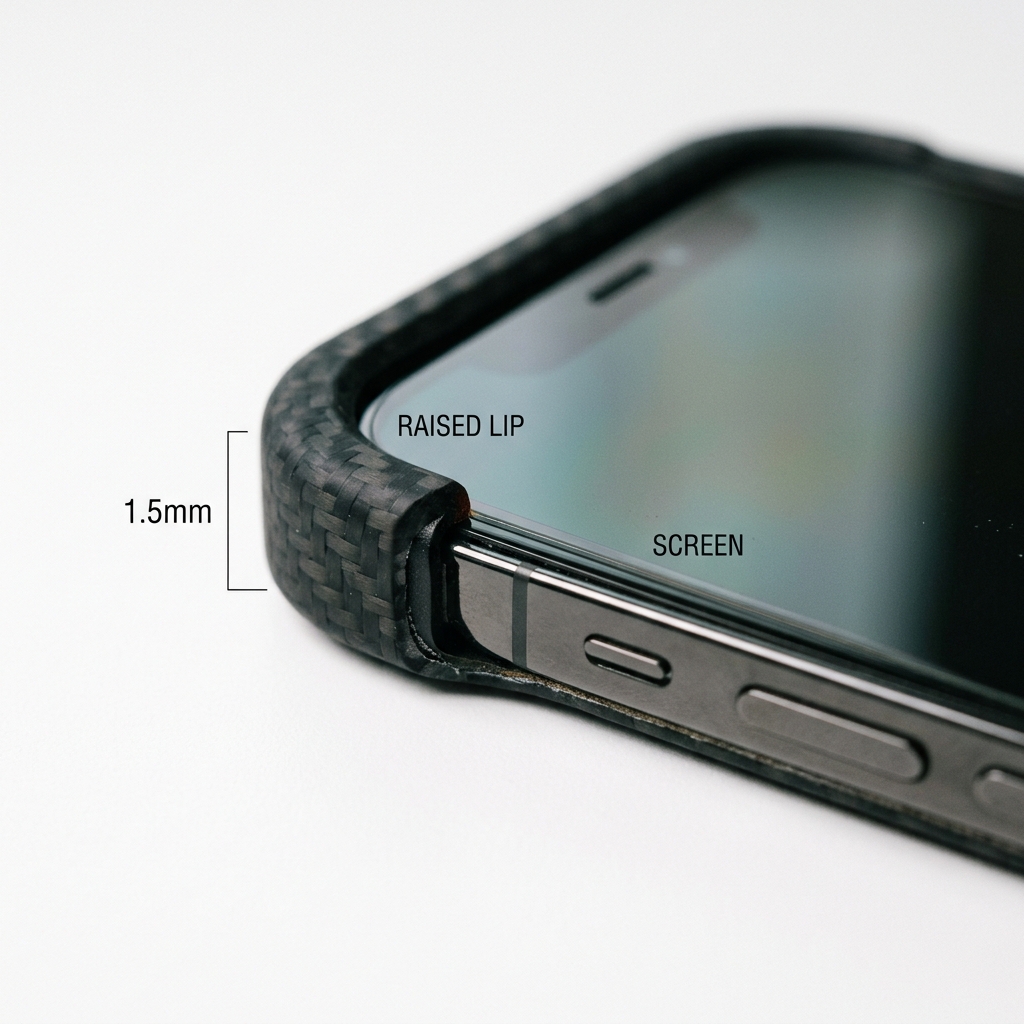
A raised lip is the ridge around your screen that prevents it from touching the ground on a face-down drop. The minimum you want is 1.5mm above the screen surface. Anything less and a grain of sand or a small pebble can bridge the gap and crack your screen anyway.
Many slim cases advertise a “raised bezel” but only deliver 0.5-0.8mm of clearance. That’s barely enough to protect against a flat surface, let alone anything textured.
2. Corner Air Cushions
Corners absorb the most impact force during a drop. Cases with internal air pockets at each corner compress on impact and dissipate energy before it reaches the phone frame. Spigen’s Air Cushion Technology and OtterBox’s shock-absorbing bumpers both use this principle, though they engineer it differently.
You can usually spot air cushions by looking at the inside corners of a case. If you see hollow channels or visible air pockets, that’s what you want.
3. Material Layering
Single-material cases (pure silicone, pure TPU, pure polycarbonate) each have weaknesses. Silicone absorbs shock but tears easily. Polycarbonate resists scratches but transmits impact force directly. TPU is flexible but thins out over time.
The best protective cases use at least two materials in combination. A hard polycarbonate shell with a soft TPU inner lining gives you scratch resistance on the outside and shock absorption on the inside. Mous takes this further with their AiroShock technology, embedding micro air pockets within the TPU layer itself.
4. Camera Bump Protection
This one gets overlooked. Modern phone cameras protrude 2-4mm from the back. If your case doesn’t extend past the camera bump, laying your phone on a table creates a pivot point. One accidental press near the opposite edge and your phone rocks, potentially sliding off surfaces.
Check that the case creates a flat surface when placed face-up. If the phone wobbles, the camera bump isn’t adequately protected.
What “Military-Grade” Actually Means (And Doesn’t Mean)
The term “MIL-STD-810G” (or 810H) appears on half the cases on Amazon. Here’s what it actually refers to: a U.S. military standard that includes 29 test methods covering everything from humidity resistance to gunfire shock. When a phone case claims MIL-STD-810G compliance, they’ve typically tested against one of those 29 methods, specifically Method 516.8, which involves dropping the device from 4 feet onto plywood 26 times.
Plywood. Not concrete. Not asphalt. Not the tile floor in your kitchen.
The standard also doesn’t require third-party verification. A company can self-certify. So when two cases both claim “military-grade protection,” one might have been tested in a professional lab while the other was dropped onto a wooden floor in someone’s office.
This doesn’t mean MIL-STD ratings are useless. It means you should treat them as a minimum baseline, not a guarantee.
Real Users, Real Drops: What Reddit Says
Lab tests tell one story. Daily use tells another. Across multiple Reddit threads from 2024 and 2025, Mous case users consistently report excellent drop protection, with some describing their phones surviving falls onto concrete from significant heights with no damage.
But there’s a catch. A growing number of users in 2025 threads have flagged quality control issues: side panels splitting, button covers peeling off within weeks, and newer models feeling less substantial than earlier versions. One recurring piece of community advice stands out: if you buy a Mous case, purchase through Amazon rather than direct. Returns and exchanges are significantly easier if you get a defective unit, which appears to happen more often than you’d expect at the $70-85 price point.
For those looking for alternatives, Caudabe gets frequent mentions for better build quality consistency, while Spigen remains the go-to for value-conscious buyers who want solid protection without the premium price tag.
The Thickness vs. Protection Tradeoff
Thicker isn’t always better. A 3mm-thick silicone case can actually perform worse than a well-engineered 2mm dual-material case. The reason comes down to how materials handle impact force.
Think of it this way: a stack of pillows absorbs a fall, but a trampoline redirects the energy. The best cases do both. They absorb initial impact through soft inner materials while the rigid outer shell distributes remaining force across a wider area instead of concentrating it at the point of impact.
OtterBox’s Defender series runs about 4mm thick and offers maximum protection. Their Symmetry line is roughly 2.5mm and still provides solid drop performance. The difference? The Defender is built for people who work construction sites or take their phone mountain biking. The Symmetry handles daily life drops just fine.
Pick the protection level that matches how you actually live, not the worst-case scenario you can imagine.
Screen Protectors: The Other Half of the Equation
A phone case protects against drops. A screen protector guards against scratches and distributes impact force across the screen surface. Using both together is the most effective approach, but the type of screen protector matters.
Tempered glass protectors (9H hardness) absorb impact by cracking themselves instead of your actual screen. They’re essentially sacrificial layers. A quality tempered glass protector from brands like amFilm or Spigen costs $8-15 for a two-pack and takes the hit so your $379 screen doesn’t.
Film protectors (TPU or PET) resist scratches but don’t absorb impact the same way. They’re better for minor abrasions than face-down drops. If you’re only going to use one type, go tempered glass.
How to Evaluate Any Case in 30 Seconds
Next time you’re shopping for a case, run through this checklist:
- Lip check: Hold the case at eye level. Can you clearly see the ridge extending past where the screen would sit? If you have to squint, it’s not enough.
- Corner squeeze: Press the corners. Do they compress slightly? Good. If they’re completely rigid, there’s no shock absorption.
- Wobble test: Place the case face-up on a flat table. Does it rock because of the camera cutout? If yes, the camera area isn’t protected.
- Material check: Is the case a single material throughout, or can you see/feel different layers? Dual-material cases provide better protection across impact types.
Our Recommendations by Budget
Based on testing and community feedback, here’s what we’d suggest at each price tier:
Under $20: Spigen Tough Armor. Dual-layer construction, 1.5mm raised lip, air cushion corners. The protection-to-price ratio is hard to beat. Available for virtually every popular phone model.
$30-50: Caudabe Sheath. Slim profile with surprisingly good drop performance. Users consistently praise the build quality and the fact that it doesn’t add much bulk. A good middle ground between protection and aesthetics.
$50-85: Mous Limitless 5.0. Aramid fiber or bamboo back options with their proprietary AiroShock material. Genuinely excellent drop protection with a premium look. Just buy through Amazon for easier returns in case of QC issues.
Maximum protection: OtterBox Defender. The bulkiest option on this list, but also the one you’d trust on a construction site. Built-in screen protector, multi-layer defense, and a track record that spans over a decade.
FAQ
Do I need both a case and a screen protector?
Using both provides the best protection. A case handles drops and edge impacts, while a tempered glass screen protector absorbs face-down impact and prevents scratches. Together, they cover the two most common ways screens get damaged.
Does a thick case mean better protection?
Not necessarily. A well-engineered 2mm dual-material case can outperform a 4mm single-material case. What matters is material combination, corner reinforcement, and raised lip height, not thickness alone.
Are clear cases protective?
Some are, some aren’t. Clear cases from Spigen or Casetify with reinforced corners and raised bezels offer decent protection. Ultra-thin clear cases from no-name brands typically don’t. Check the four features listed above regardless of the case’s appearance.
How often should I replace my phone case?
Replace your case when you notice the material hardening, corners losing their springiness, or the fit becoming loose. For most TPU-based cases, that’s every 12-18 months of daily use. Polycarbonate shells last longer but can develop hairline cracks that compromise impact resistance.
Is “military-grade” protection a real standard?
MIL-STD-810G is a real U.S. military testing standard, but phone case manufacturers typically test against only one of its 29 methods, and the test involves drops onto plywood, not concrete. Treat it as a minimum baseline, not a guarantee of protection in real-world conditions.