
Last updated: June 2026. This article is reviewed quarterly.
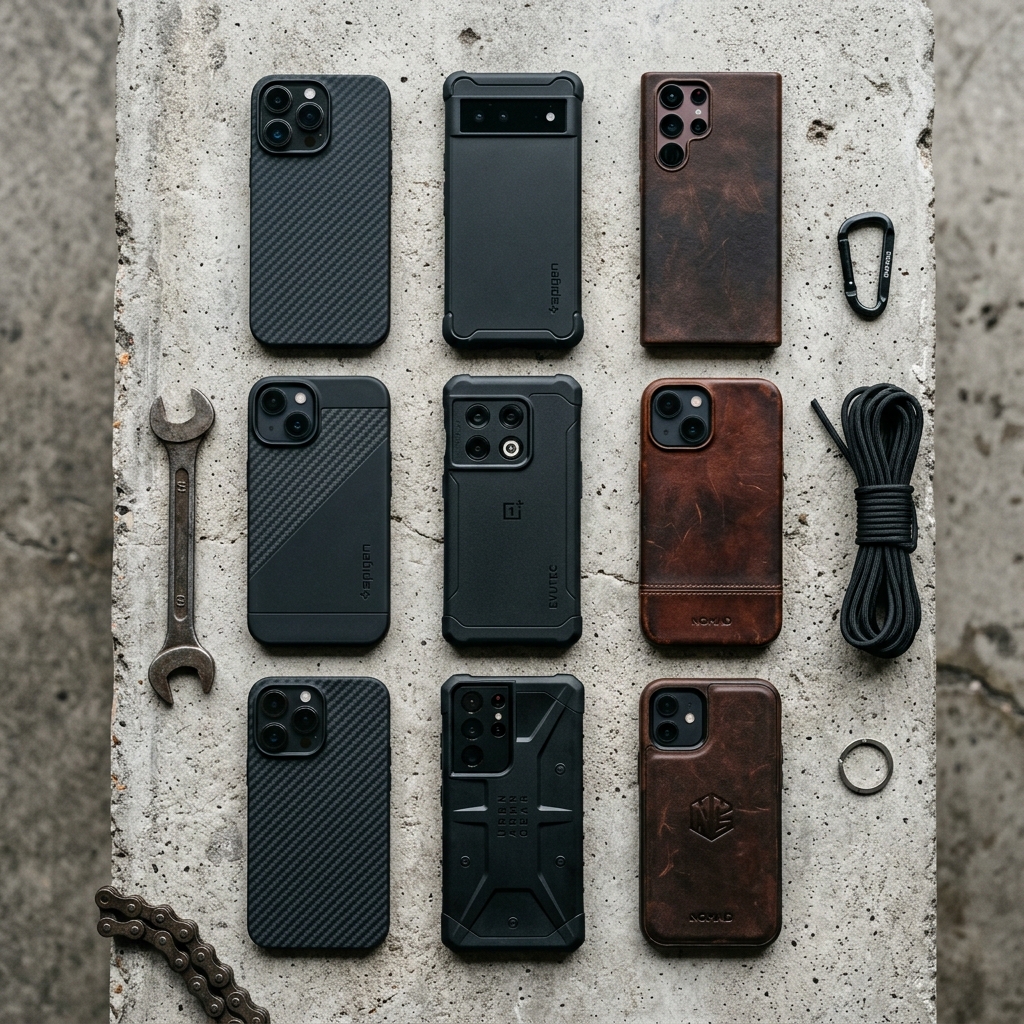
Every day, thousands of smartphone screens shatter despite being housed in cases stamped with “military-grade” certifications. This ubiquitous label, typically accompanied by the technical-sounding code “MIL-STD-810G,” has become the default marketing tool for phone accessory manufacturers. It promises that a $15 piece of molded plastic will protect your $1,200 glass sandwich from concrete pavements.
The truth is that the U.S. military has never tested, reviewed, or certified a consumer phone case. The “military-grade” label is a self-declared claim that relies on a highly flexible, non-standardized testing protocol.
To understand what you are actually buying when you select a rugged case, we must peel back the marketing layers. As a tech developer who has analyzed hardware stress limits, I decided to dissect the physics of drop protection, look at how MIL-STD-810G is tested in commercial labs, and compare how premium materials like aramid fiber stack up against standard TPU. Here is the technical breakdown.
—
Deciphering the Standard: What is MIL-STD-810G?
MIL-STD-810G is a set of testing standards developed by the U.S. Department of Defense to evaluate how military equipment holds up under environmental stress. It covers everything from sandstorms to extreme vibrations.
The portion of the standard that applies to phone cases is Method 516.6 (Shock). In a typical laboratory drop test, this involves:
* Drop Height: Dropping the device from a height of 4 feet (48 inches).
* Drop Surface: Impacting onto 2 inches of plywood over concrete.
* Drop Count: Dropping the device 26 times in total, hitting all faces, edges, and corners.
* Testing Device: The test is often performed using a dummy weight inside the case rather than a functional, fragile glass phone.
Because the military does not oversee this testing, manufacturers can design their own lab parameters. A case can pass the test even if the phone’s glass back shatters, as long as the case itself remains structurally intact.
—
Materials Science: TPU vs. Aramid Fiber vs. Polycarbonate
A case’s ability to protect your phone depends entirely on the materials used to absorb and disperse kinetic energy during an impact.
| Material | Energy Absorption | Tensile Strength | Bulk/Thickness | Common Brands |
| :— | :— | :— | :— | :— |
| Thermoplastic Polyurethane (TPU) | Excellent (elastic absorption) | Moderate | Medium to High | Spigen, OtterBox |
| Polycarbonate (PC) | Poor (brittle, structure-based) | High (rigid protection) | Low | Standard Clear Cases |
| Aramid Fiber (Kevlar) | Outstanding (disperses force) | Extremely High | Ultra-Thin | Mous, Pitaka |
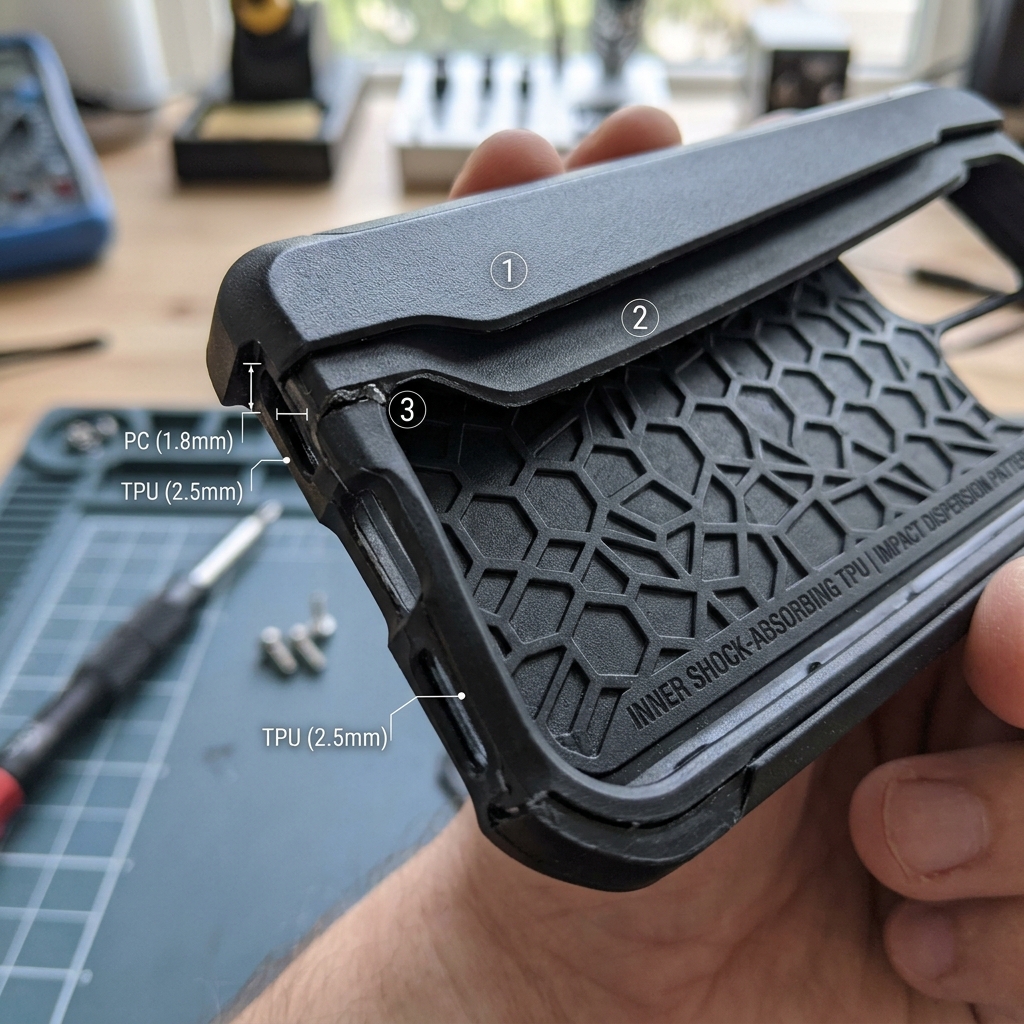
Most standard cases rely on a blend of TPU and Polycarbonate. The TPU serves as a soft inner bumper to absorb the initial shock, while the hard PC shell provides structural rigidity to prevent the phone from bending or twisting.
—
How Premium Cases Disperse Kinetic Energy
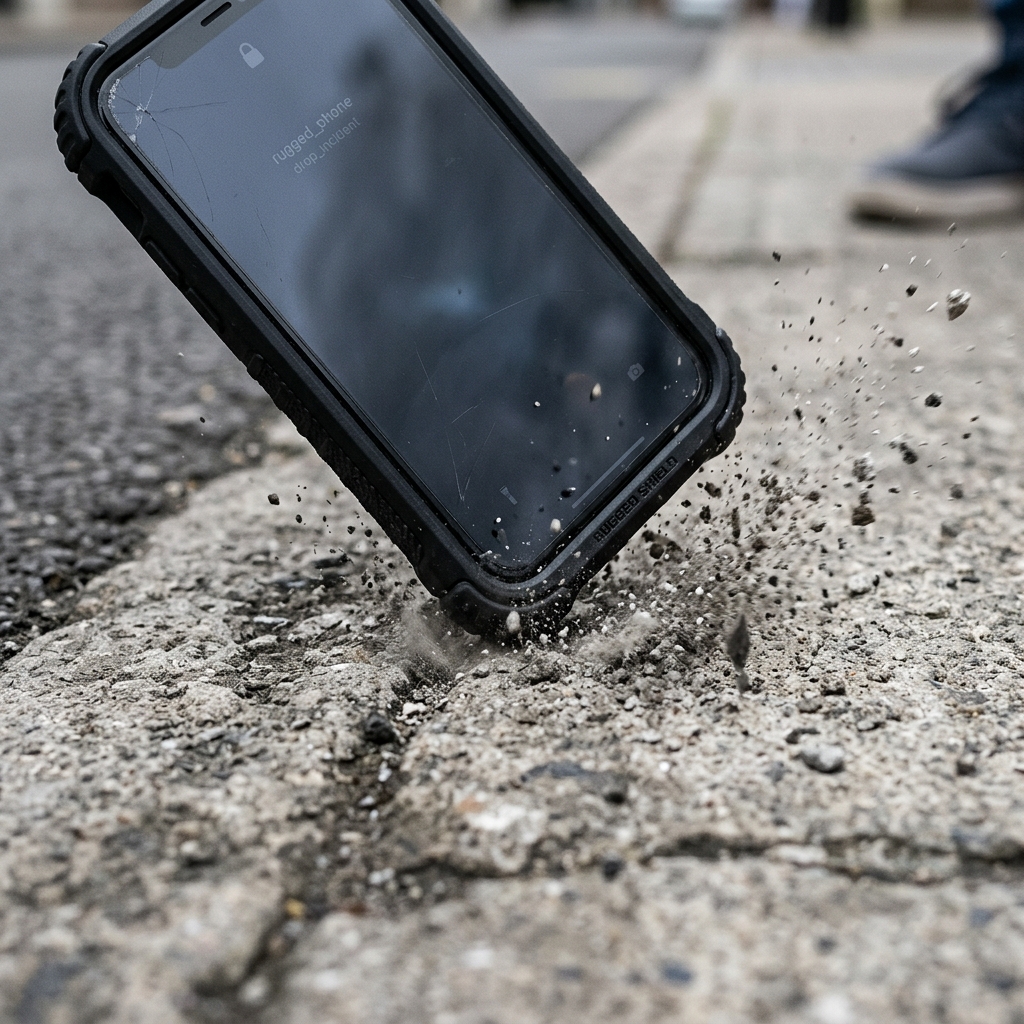
When a phone hits concrete, the kinetic energy of the fall must go somewhere. If the case is rigid and cheap, the shock waves travel directly through the frame and shatter the fragile glass screen or backplate.
Premium manufacturers like Mous and Spigen use engineered internal structures to slow down the deceleration of the phone upon impact.
* Corner Air Pockets: Spigen’s Air Cushion technology creates tiny empty chambers in the corners of the case. When the corner hits the ground, the air pocket compresses, extending the duration of the impact and reducing the peak force.
* Micro-Cellular Materials: Mous utilizes a proprietary material called AiroShock. This material contains micro-bubbles of air that act as tiny springs, absorbing the kinetic energy and converting it into heat before it reaches the phone.
* Aramid Fiber Layering: High-end cases use woven aramid fibers to create a shell that is stronger than steel on a weight basis, protecting against sharp punctures without adding bulk.
On hardware forums, engineers frequently point out the limitations of standard drop testing:
“MIL-STD drop testing onto plywood is a joke. Plywood has natural flex that absorbs energy. In the real world, you drop your phone onto solid concrete or asphalt, which has zero flex. If your case doesn’t have active shock-absorbing materials like TPU or micro-gels, the energy will pass straight through to the glass.”
This is why many cheap “rugged” plastic cases fail on the first real drop on a city street.
—
What to Look for in a Real Protective Case
If you want actual protection rather than a marketing buzzword, ignore the military-grade stamp and look for these physical design features:
* Raised Lip (Bezel): The case must have a lip that extends at least 1.2mm above the screen and 1.0mm around the camera module. This prevents the glass from contacting flat surfaces during a face-down fall.
* Tactile Grip: A case that is easy to hold prevents drops from happening in the first place. Matte finishes, ribbed side rails, and textured backs are superior to smooth, glossy plastics.
* Rigid Backplate: A case should resist flexing when you press the center. A stiff backplate prevents the phone from twisting, which is a major cause of corner glass cracks.
—
Frequently Asked Questions
Will a military-grade case guarantee my screen won’t crack?
No. No case can guarantee complete safety, especially if the phone lands screen-down on an uneven surface like gravel or a stone edge. Always pair a protective case with a high-quality tempered glass screen protector.
Is aramid fiber worth the extra cost over standard TPU?
Aramid fiber is excellent if you want maximum protection while keeping the phone thin and pocketable. However, if you do not mind a slightly thicker case, a high-quality TPU-and-polycarbonate hybrid case (like Spigen Tough Armor) provides comparable protection at a much lower price point.
I’ve been looking to buy a product recently, but I’m worried about the longevity of the battery / hardware under heavy daily use. For those who own a this brand model, does it actually hold up over 1-2 years, or should I invest in an extended protection plan? Thanks!